

 English
 русский
 中文简体
中文简体How do you test a safety valve?
2026-02-16
Content
Quick Answer: The Three Primary Ways to Test a Safety Valve
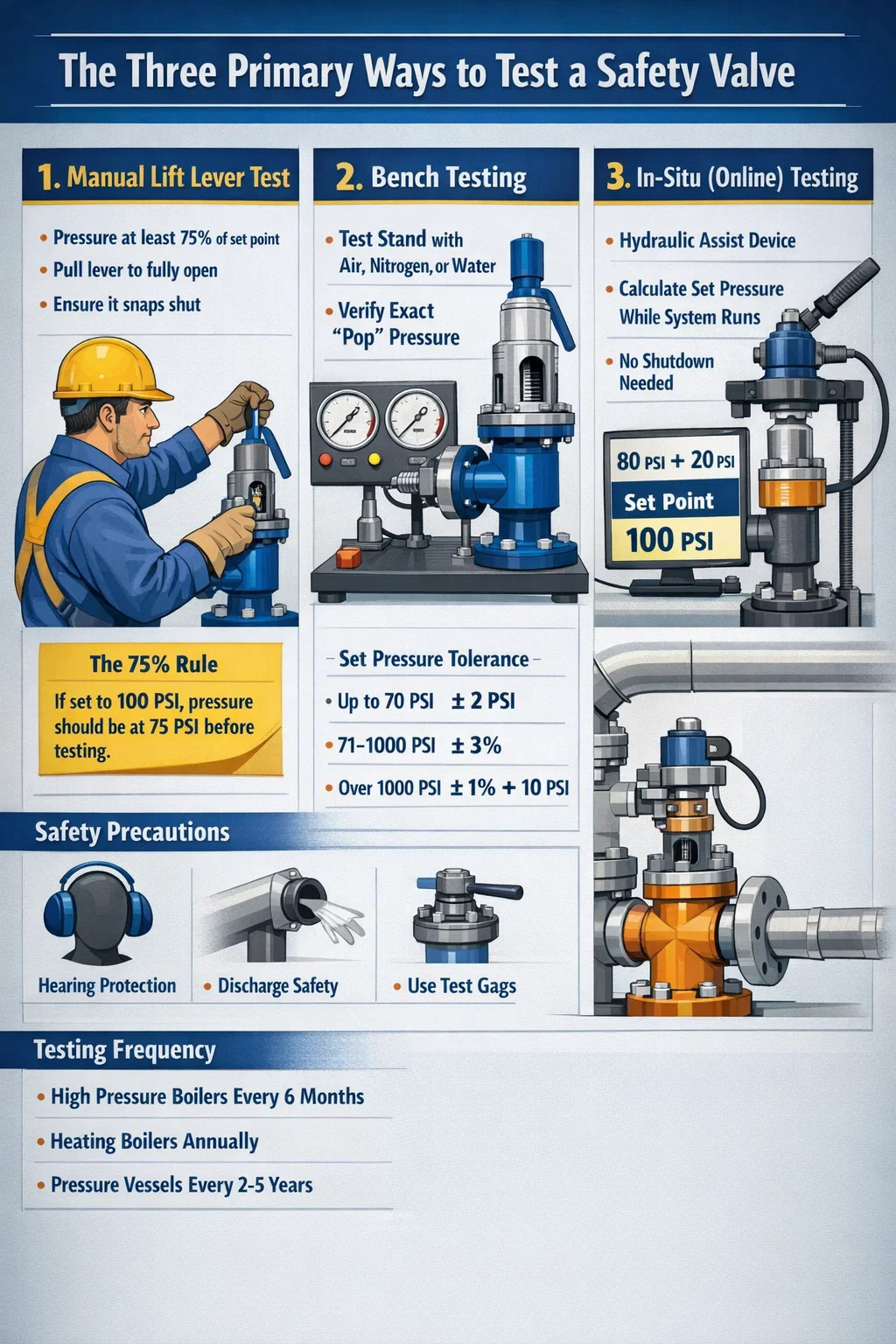
To ensure a safety valve functions correctly, it must be tested using one of three primary methods: Manual Lift Testing using the physical lever, Bench Testing on a dedicated test stand, or In-Situ Testing (also known as Online Testing) using high-precision hydraulic assist tools.
Testing is not merely an operational check; it is a regulatory requirement. For example, ASME Section VI and VII provide specific intervals for these tests to prevent the valve components from seizing due to corrosion or mineral buildup. Neglecting these procedures can lead to catastrophic failure during an overpressure event.
Method 1: The Manual Lift Lever Test
This is the most basic form of verifying a safety valve is operational. Most industrial valves come equipped with a manual handle or "try lever" designed for this exact purpose.
The 75% Rule for Manual Testing
You must never pull the lever on a cold or unpressurized system. Most manufacturers specify that the system pressure must be at least 75% of the set pressure before the lever is pulled. For instance, if your safety valve is set to 100 PSI, the system should be at 75 PSI before testing. This pressure provides the necessary lift force to prevent the valve disc from slamming back down and damaging the delicate seating surfaces.
- Pull the lever to the fully open position.
- Hold it for a few seconds to flush out debris.
- Release it and ensure it snaps shut immediately without leaking.
Method 2: Bench Testing (The Gold Standard)
Bench testing is the most accurate way to verify the exact "pop" pressure and reset pressure of a safety valve. This requires the valve to be removed from the pipeline and taken to a certified workshop.
The Bench Testing Setup
The valve is mounted on a test stand that uses air, nitrogen, or water to simulate system pressure. Technicians slowly increase the pressure until the safety valve opens.
| Set Pressure Range | Allowable Tolerance |
|---|---|
| Up to 70 PSI | +/- 2 PSI |
| 71 PSI to 1000 PSI | +/- 3% |
| Over 1000 PSI | +/- 1% plus 10 PSI |
Method 3: In-Situ or Online Testing
For large plants where shutting down a boiler is too expensive, In-Situ testing is the solution. This method uses a specialized hydraulic device to pull up on the valve stem while the system is still running.
How In-Situ Calculations Work
A computer calculates the safety valve set point by combining the existing system pressure with the force applied by the hydraulic tool. For example, if the system is at 80 PSI and the hydraulic tool applies 20 PSI worth of force to make it pop, the set pressure is confirmed at 100 PSI. This allows for verification without ever reaching the full set pressure of the boiler, reducing risk.
Critical Safety Precautions During Testing
Because a safety valve release is violent and loud, specific safety protocols must be followed to protect personnel:
- Hearing Protection: A popping valve can exceed 120 decibels.
- Discharge Orientation: Ensure the discharge pipe is pointed away from walkways.
- Gagging: If you are testing multiple valves on one header, "test gags" are used to keep other valves closed. Critical Warning: Never over-tighten a gag, or you will bend the valve stem.
When Should You Test Your Safety Valve?
The frequency of testing depends on the severity of the service. A valve in a clean air system needs less frequent attention than one in a corrosive chemical line.
- High Pressure Steam Boilers: Often require a manual test every 6 months and a full pressure test annually.
- Heating Boilers: Typically require a manual check once a year before the heating season begins.
- Pressure Vessels: Inspection intervals usually range from 2 to 5 years depending on local jurisdiction laws.