

 English
 русский
 中文简体
How to Put Rings on a Piston: Order, Markings, and Gap Clocking Done Right
2026-11-02
Content
- 1 Install the Oil Ring First and the Top Ring Last
- 2 Read the Markings Before You Open the Expander
- 3 Clock the Gaps, Then Measure the End Gap
- 4 Hand Pressure, Not Leverage
- 5 Checks That Take Two Minutes and Save an Engine
- 6 What Goes Wrong, and What It Looks Like Later
- 7 Why Piston Fit Matters Beyond the Bench
A ring that snaps on its way over the crown usually takes a piston land with it, and the rebuild stops there. That is why the practical sequence matters more than most people expect: oil ring first, second compression ring next, top ring last, with the marked face toward the crown and the end gaps clocked apart. No ring should ever be persuaded onto a piston with a screwdriver, a bench vise or a pair of side cutters.
Everything else in this job — the expander tool, the oil film, the feeler gauge — exists to protect those three habits. What follows is the order, the markings that decide which way a ring faces, the gap positions that keep combustion pressure where it belongs, and the failure patterns that appear later when one step gets rushed.
Install the Oil Ring First and the Top Ring Last
Working bottom-up is not tradition, it is damage control. If the compression rings are already sitting in their grooves, every pass of the expander tool has to clear them on the way down to the oil groove, and a jaw that grazes a fitted ring can lift it out of square or nick the face. Fit the oil ring while every groove above it is still empty, then move upward.
Three-piece oil rings deserve the extra minute they take. The expander drops in first with its ends butted together, never overlapped, and the upper and lower rails follow by hand, each one seated squarely in its groove. A rail that climbs over the expander instead of under it will not show up until the engine starts smoking.
| Groove (from crown) | Ring | Identification | Fitting order |
|---|---|---|---|
| Top | Top compression ring | "TOP" or a dot near the gap; chrome or moly face | Third |
| Second | Second compression ring | Mark or dot; often a cast ring with a taper or inner bevel | Second |
| Bottom | Oil control ring (two or three piece) | Expander plus one or two rails; no up or down on the rails | First |
Read the Markings Before You Open the Expander
Nearly every ring tells you which way is up long before a tool touches it. The mark is small, it is usually stamped beside the end gap, and it points at the crown of the piston — not at the crankcase. Skip that detail on a second ring and the engine may still run, still show decent compression, and still burn oil from the first week.
- "TOP", a dot or a letter near the gap: that side faces the crown, no exceptions.
- An inner bevel or a tapered face: these rings only work one way round; the ring maker's diagram settles it, and guessing doubles oil consumption.
- Chrome or moly inlay: identifies the top ring from the second, but says nothing about direction on its own.
- Groove fit: the ring should drop in and turn freely; a ring that binds is either the wrong part or the groove still carries carbon.
If a ring arrives with no mark and no diagram in the box, stop and ask the supplier rather than fitting it symmetrically. On production parts the same rule applies in reverse: a machined piston with an out-of-spec groove width will not seal properly no matter how carefully the ring goes on.
Clock the Gaps, Then Measure the End Gap
Once all three rings are seated, spread the gaps around the bore. Lined-up gaps give combustion pressure a straight path to the crankcase, which shows up as blow-by, oil pushed out of the breather and a compression reading that never matches the build sheet.
- Top ring gap at roughly 12 o'clock, second ring gap at 6 o'clock — 180 degrees apart.
- Oil ring rails at 3 and 9 o'clock, with the expander joint offset from both rails.
- Two-stroke pistons are different: a pin in the groove fixes the gap position, and the ring must straddle that pin.
- Where the workshop manual specifies its own clocking, the manual wins over any general convention.
Before fitting, square the ring in the bore — piston crown upside down or a dedicated squaring tool — and measure the end gap with a feeler gauge at the least-worn part of the bore. A common starting point for a naturally aspirated top ring is about 0.004 inch per inch of bore, but boosted and forged builds need more, and the ring manufacturer's figure always beats a rule of thumb. File only if the spec calls for file-fit, cut from the inside toward the outside, and deburr both ends.
Hand Pressure, Not Leverage
Rings are spring steel, and spring steel does not forgive a lever. A proper expander tool with flat, smooth jaws opened just wide enough to clear the piston diameter is all the force the job needs.
- Wipe the grooves dry, then oil the skirt and groove flanks lightly with clean engine oil so the first pass does not scuff.
- Seat the oil ring expander in the lowest groove with its ends butted, not overlapped.
- Fit the rails by hand with light thumb pressure around the circumference — never spiral them on.
- Open the expander only as far as the piston requires and keep the jaws flat so the ring cannot take a twist.
- Fit the second ring with its mark up, then the top ring the same way.
- Turn each ring a full circle in its groove with a fingertip; it should move freely and sit below the land face.
- Guide the piston into a tapered ring compressor and check that no ring edge catches on the sleeve lip.
Checks That Take Two Minutes and Save an Engine
Everything below is done with the piston still on the bench. Once the sump is bolted up, none of it is inspectable again without another strip-down.
- Side clearance: a feeler gauge between ring and land should enter with light drag; if it will not enter, the ring is too thick or the groove is still carboned.
- Free rotation: every ring turns through a full circle without a tight spot.
- End gaps: re-check after fitting, because a ring twisted in the tool can open up by several thousandths.
- Oil ring rails: confirm neither rail is pinched under the expander.
- Gap clocking: confirm no two gaps line up before the compressor goes on.
What Goes Wrong, and What It Looks Like Later
Most ring failures are decided in the ten seconds before the ring reaches the groove, and they surface hundreds of miles later as symptoms that look like something else entirely.
| Error | Damage | First symptom |
|---|---|---|
| Screwdriver or pliers used to spread a ring | Crack at the gap or a lifted ring land | Scored bore, blue smoke from start-up |
| Ring fitted upside down | Oil control lost, second ring scrapes oil upward | Oil consumption with normal compression |
| All gaps aligned | Gas path straight past the ring pack | Blow-by, oil out of the breather |
| Expander ends overlapped | Uneven rail tension, rail rides over the expander | Heavy oil use, vertical scoring |
| Dry fit or a twisted ring in the compressor | Face scuffing in the first minutes of running | Glazed bore, honing marks rubbed away |
Why Piston Fit Matters Beyond the Bench
On a bench, fitting a ring is a thirty-second operation. In production, the same operation is judged by groove width, land flatness and bore roundness, because a ring can only seal against geometry that is already correct. Yuyao Zhedong Automotive Parts Factory, trading as ZEAST Autoparts and founded in 1988 in Yuyao, Zhejiang, sits on that side of the problem: the company machines pistons, dryer pistons, plungers, guide sleeves and spring seats alongside its pneumatic brake valve and valve-cylinder assembly lines, and states that it has held ISO 9001 certification since the early 2000s and exports to more than 30 countries.
 Precision Automotive Engine Pistons for Demanding ConditionsA machined piston option where ring-groove and bore geometry matter, described with high-strength materials for efficient engine operation.View Product →
For a buyer, the practical link between the workshop and the purchase order is tolerance discipline. A piston whose ring groove runs wide lets the ring flutter; one whose groove runs tight traps it, and the ring then behaves exactly like a badly fitted one — smoke, blow-by or a scuffed bore — even though it was installed correctly.
 Dryer Piston for Airflow Control and SealingA dryer-system piston for regulating air or fluid flow, presented with high sealing performance and high-temperature resistance for stable drying operation.View Product →
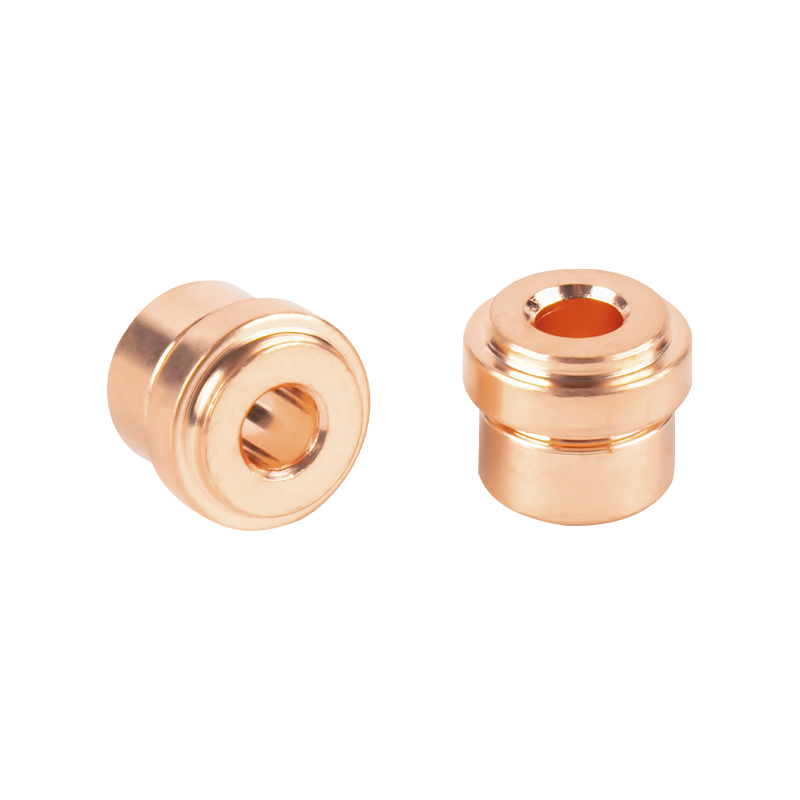 153 Spring Seat for Automotive Suspension SupportA precision-machined spring seat intended to support and position suspension springs, helping maintain alignment and reduce wear under dynamic loads.View Product →
The same thinking applies to other moving parts inside an air or hydraulic circuit: a valve-cylinder assembly with a sticking piston or a worn guide sleeve fails in service for reasons that have nothing to do with the seal itself. Assembly parts live and die by clearances measured in hundredths of a millimetre.
More detail on the factory's machining range is available on the ZEAST Autoparts homepage.
Fit the oil ring first, keep the marked face up, and clock the gaps apart — those three habits prevent almost every failure in the table above. The rest is patience with the expander tool and a feeler gauge used before the piston goes back in the bore, not after.