

 English
 русский
 中文简体
Umbrella Valve Seal Guide: Why Tiny Rubber Check Valves Hold Pressure or Fail
2026-11-23
Content
- 1 What an umbrella valve seal actually does
- 2 Where these seals sit in brake and air systems
- 3 Material selection: match the rubber to the medium
- 4 The dimensions that decide whether it seals
- 5 Failure modes worth recognizing on the bench
- 6 What to put on the drawing and what to ask before the first lot
- 7 How ZEAST fits into this kind of supply chain
- 8 A practical closing note
An air dryer keeps purging, a brake valve bleeds off pressure overnight, or a drain port spits water back into the line. In each case the part that gave up often costs less than a cup of coffee: the umbrella valve seal, a one-piece rubber check valve roughly the size of a fingernail. There is no useful middle ground with this component. It either lifts at the intended pressure and reseats bubble-tight, or it leaks, chatters, or stays open, and no amount of tightening elsewhere in the circuit will compensate for it.
The short version: specify an umbrella seal by function, not by shape. Cracking pressure, seat flatness, compression set and media compatibility decide whether the part survives hundreds of thousands of cycles. Durometer and outer diameter alone tell you very little. The sections below explain what the seal does, where it sits in a pneumatic brake system, which elastomer fits which medium, which drawing tolerances actually matter, and what to ask before the first production lot ships.
What an umbrella valve seal actually does
An umbrella valve is a passive one-way element. A domed elastomer skirt sits on a central stem that is pushed through a small port in a plastic or metal body. The skirt edge rests against a flat seat with a light molded preload, covering a ring of holes around the stem. Pressure arriving from the underside lifts the skirt and flows through those holes; pressure in the reverse direction presses the skirt harder onto the seat and closes the path.
Three characteristics explain why designers keep choosing this geometry over a spring-loaded check valve. Cracking pressure is very low, typically 0.3 to 5 kPa, so the seal opens on the slightest differential. The open area is large relative to the footprint, which means high flow in a shallow package. And there is nothing to fatigue or gall: no spring, no metal seat, no guide.
The trade-off is that everything depends on rubber behavior. A spring check valve can be inspected by measuring spring rate; an umbrella seal has to be judged by preload, hardness, compression set and the flatness of the seat it lands on.
Where these seals sit in brake and air systems
In commercial vehicle air circuits, the umbrella seal is usually a supporting detail rather than the headline specification, yet it is one of the most frequently replaced elements inside a valve body. Typical locations include:
- Air dryer purge and regeneration circuits, where the seal releases purge air and blocks backflow into the desiccant bed.
- Exhaust ports of relay valves and booster valves on pneumatic brake systems, where a slow leak shows up as a pressure drop after the engine stops.
- Automatic drain valves and check valves fitted to air reservoirs and filters.
- Clutch and shutoff cylinders that must hold a small differential without drift.
- Compressor unloaders, air horns and pneumatic accessory lines.
- Non-automotive duties such as washer pumps, medical suction lines, water filtration heads and appliance vents.
Because the seal sits deep inside an assembly, its condition is normally diagnosed from system behavior rather than direct inspection. That is why the small one-way elements described in this overview of pneumatic brake valve key components deserve the same drawing discipline as the piston and diaphragm next to them.
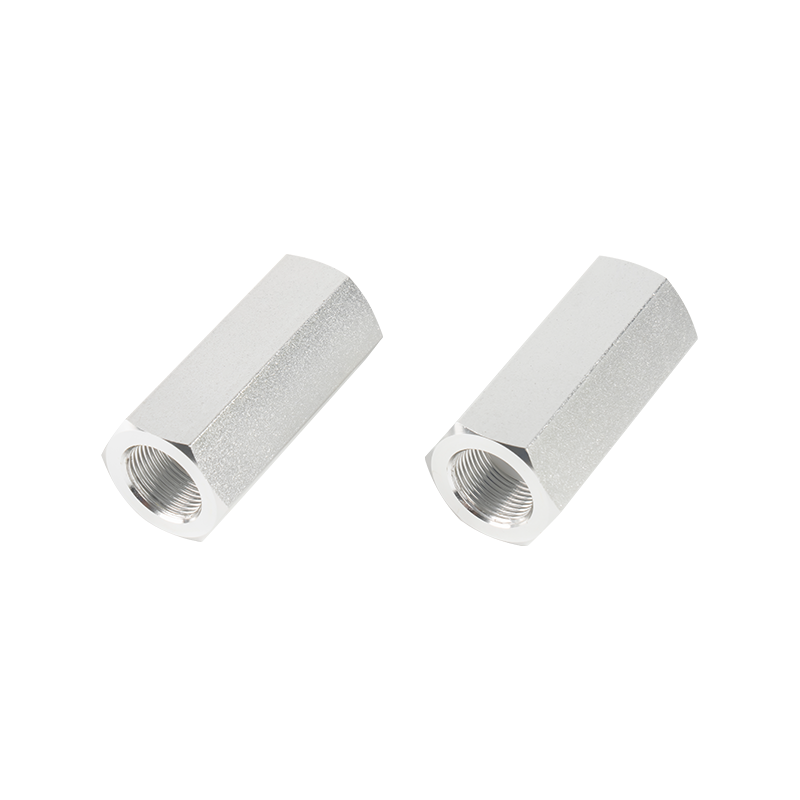 Automobile Check Valve for One-Way Fluid FlowA one-way valve that helps prevent backflow in fuel and cooling systems, where small sealing elements need careful material and drawing specification.View Product →
Material selection: match the rubber to the medium
Most field failures attributed to "bad rubber" are actually mismatches between elastomer and medium. Compressed air is rarely clean: it carries compressor oil, moisture and particles, and the seal sees that mixture at elevated temperature for years.
| Elastomer | Service temperature | Typical duty | Where it disappoints |
|---|---|---|---|
| NBR (nitrile) | -40 to +100 C, short excursions to 120 C | Air with oil carryover, diesel, mild hydraulic fluid | Swells in ester-based oils; weak ozone resistance |
| HNBR | -40 to +140 C | Hot, oil-laden air; higher-temperature brake circuits | Higher cost, tighter cure control required |
| EPDM | -50 to +150 C | Dryer purge ports, coolant, water, steam | Poor resistance to mineral oil and grease |
| FKM (fluorocarbon) | -20 to +200 C | Aggressive oils, fuels, hot air | Stiff when cold; highest material cost |
| Silicone (VMQ) | -60 to +200 C | Very cold air, dry gas, vent paths | Low tear strength; poor oil resistance |
Two practical notes. First, a softer compound is not a universal fix for a leaking port; it often trades a static leak for dynamic flutter. Second, if the same valve body is used in both oil-flooded and oil-free compressor systems, the seal part number should differ even though the drawing looks identical.
The dimensions that decide whether it seals
An umbrella seal drawing with only an outer diameter and a hardness value is not a specification, it is a shape. These are the features that control behavior on the bench:
- Umbrella outer diameter, which sets how far the skirt overhangs the port ring. A band of plus or minus 0.05 mm is realistic for molded parts.
- Skirt thickness and molded angle, which together define stiffness and therefore cracking pressure. Two suppliers making a "12 mm" seal at different skirt thickness will behave like different parts.
- Stem length and retention bead. A stem 0.2 mm short reduces preload; a stem too long stretches the skirt and lifts the sealing edge off the seat.
- Durometer, usually 50 to 75 Shore A for air service, with a tolerance of plus or minus 5 points stated on the drawing.
- Seat flatness and port geometry. A seat that is 0.05 mm out of flat, or scratched by a machining burr, will leak behind a perfect seal.
- Flash and parting line position. Flash across the sealing face is a leak path, not a cosmetic issue, so the drawing should name the acceptable zone.
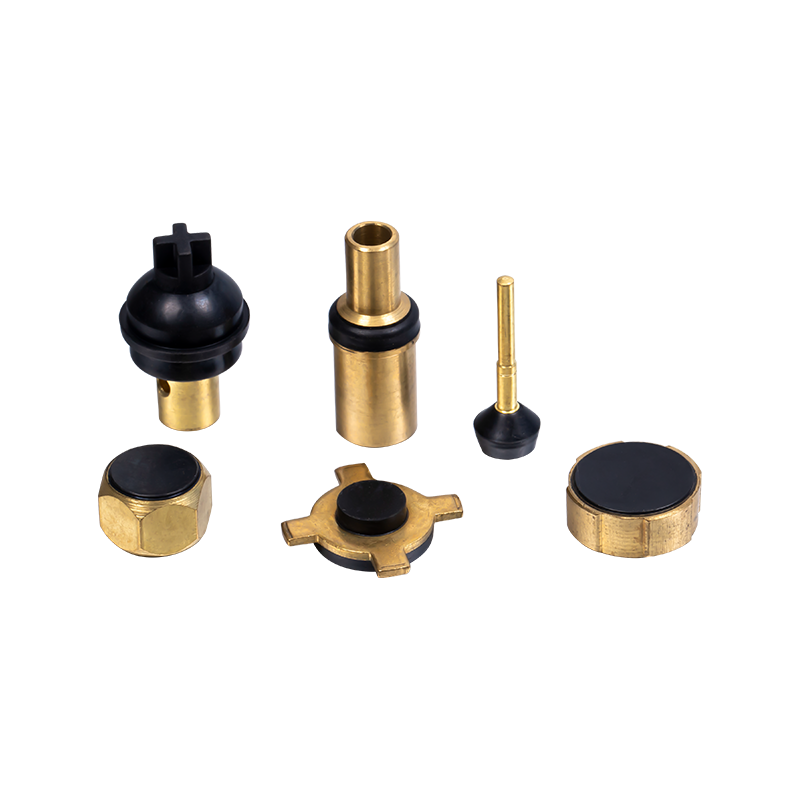 Copper and Rubber Assembly for Pneumatic Brake ValvesA copper-and-rubber assembly for pneumatic brake valves, combining conductive strength with sealing; worth checking when seal behavior and returned-valve diagnosis matter.View Product →
Failure modes worth recognizing on the bench
When a returned valve is opened up, the seal usually tells you what happened upstream. A short diagnosis list saves a lot of guessing:
- Flat, shiny skirt with no rebound. Compression set from continuous compression at temperature. Check the compound's set value, not just its hardness.
- Cracks at the skirt root. Ozone attack or flex fatigue, common when the seal chatters against a rough seat.
- Nibbled or torn edge. Contamination, machining burrs or a port hole drilled without deburring.
- Swollen, soft and tacky. Wrong elastomer for the oil carried over from the compressor.
- Hard, stiff, slow to seat. Cold stiffening at low ambient temperature, or over-cure at the molder.
- Clean seal, still leaking. The seat or the retaining hole is out of tolerance, so replacement seals will not help.
Drain and blowdown valves concentrate this pattern because they cycle with every purge, which is why the sealing details inside them are worth reviewing before a fleet reports water in the lines.
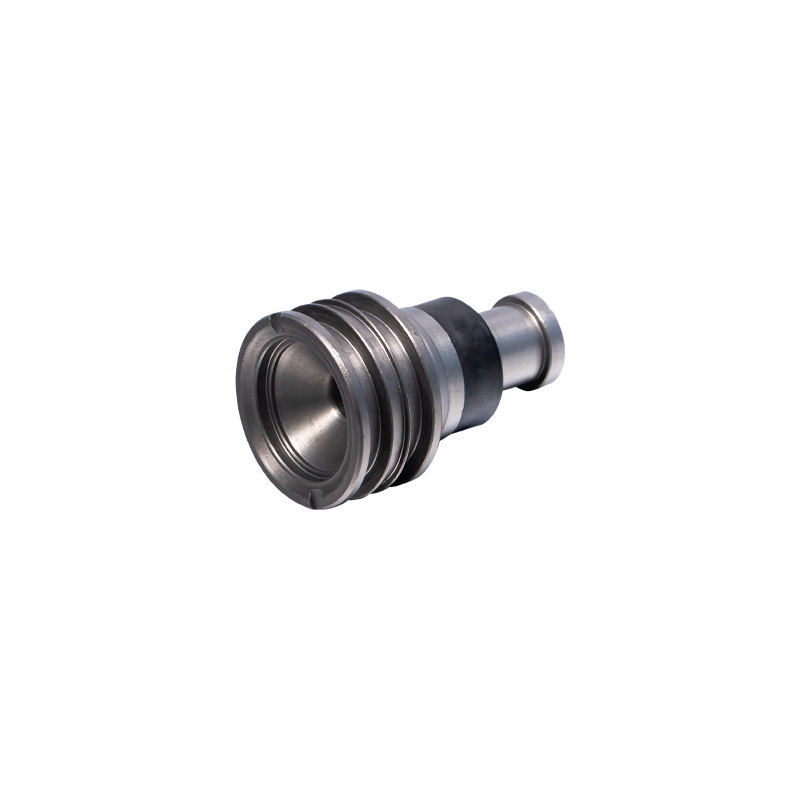 Blowdown Valve for Safe Pneumatic Pressure ReleaseA pneumatic blowdown valve for controlled pressure release in demanding systems; worth reviewing where purge cycling and clear sealing specifications affect reliability.View Product →
What to put on the drawing and what to ask before the first lot
Purchasing risk on a part this small is mostly documentation risk. A supplier can mold to a shape and still deliver inconsistent performance if the functional requirements are left implicit. Six items are worth writing into the specification:
- Hardness with tolerance, measured on the finished part rather than the compound batch sheet.
- Compression set limit, for example no more than 20 percent after 70 hours at 100 C.
- A defined cracking pressure test, with the fixture, media and ramp rate stated.
- A leak test at low pressure, such as 0.1 to 0.2 bar pressure decay or a soap film check, plus the acceptance limit.
- Cleanliness and release agent restrictions, since silicone overspray on a sealing face causes adhesion and slow seating.
- Shelf life, packaging and batch traceability of the compound, so a field return can be traced back to a cure lot.
For buyers ordering the surrounding rubber parts at the same time, it helps to keep durometer, cure and surface requirements consistent across the whole valve family rather than negotiating each item separately.
How ZEAST fits into this kind of supply chain
Yuyao Zhedong Automotive Parts Factory, trading as ZEAST Autoparts, was established in September 1988 in the Yuyao Economic Development Zone in Zhejiang and built its business on automotive brake valve seats. Over time the catalog widened to pneumatic brake valves, valve-cylinder assemblies, machined parts such as pistons, plungers and dryer pistons, and rubber products for construction machinery.
For small sealing components, the relevant capability is tooling. The factory states that it operates its own mold manufacturing center alongside hardware, rubber and adhesive workshops, which is the arrangement that allows skirt geometry, preload and parting line position to be corrected at the tool rather than compensated for in assembly. The company also states that it has held ISO 9001 quality system certification since the early 2000s. Capacity figures on its own site are given in two forms, more than five million valve seats per year and an annual capacity figure of ten million plus; both are the company's own published statements.
Its stated customer base includes FAW, Dongfeng (Second Auto), Wanxiang Group and several regional component makers, with exports claimed to more than 30 countries. In practice this means a buyer is dealing with a second- or third-tier production supplier rather than a distributor, so specifications, first article reports and change notifications can be handled directly with the manufacturing site.
A practical closing note
Treat the umbrella valve seal as an engineered functional part, not a piece of rubber bought by diameter. Name the medium, the temperature, the cracking pressure and the leak limit, insist on a seat flatness value, and ask for compression set data rather than hardness alone. Most of the leaks blamed on this component are decided long before the mold closes, in the specification that was never written.