

 English
 русский
 中文简体
Valve Seat Basics: Materials, Machining, and Brake System Applications
2026-10-19
Content
- 1 What a Valve Seat Actually Does
- 2 Seat Materials: Hardness at Temperature Is the Real Specification
- 3 Angle, Contact Width and Concentricity
- 4 Installation Sequence and the Failures It Prevents
- 5 What to Put on a Valve Seat Purchase Specification
- 6 Valve Seats in Pneumatic Brake Systems
- 7 Valve Cylinder Assemblies: Where Seats Meet Pistons
- 8 Machined Parts and Rubber Components Around the Seat
A cylinder that has lost compression but still looks clean on the bench usually tells the same story: the valve seat stopped sealing long before the valve face showed visible damage. That narrow ring contains combustion pressure, sheds most of the valve's heat, and holds the valve concentric with its guide.
The short version: a valve seat is a sacrificial sealing surface, and it is only as good as four numbers — hardness at operating temperature, seat angle, contact width, and runout to the guide. Everything else, from cutter profile to press-fit method, exists to protect those four numbers. The same logic applies to the much smaller seats inside pneumatic brake valves, where a leak of a few micrometres reads as a pressure drop on a test bench.
What a Valve Seat Actually Does
A seat carries three jobs at once, and they pull against each other. Sealing wants a narrow, precise contact band; cooling wants a wide one; alignment wants that band concentric with the guide bore.
- Sealing. The contact band is the only barrier between combustion pressure and the port; its width, position and surface finish decide how long it holds.
- Heat transfer. The valve is closed for most of the cycle, so its heat leaves through the seat into the head casting. A band that is too narrow chokes that path.
- Alignment. The seat is cut relative to the guide. If the two are not concentric, the valve is pushed sideways on every closing event.
- Renewability. Seats are made to be re-cut or replaced, so a head can be saved while material remains above the port.
| Attribute | Engine valve seat | Pneumatic brake valve seat |
|---|---|---|
| Operating temperature | Exhaust positions run several hundred degrees at the seat | Ambient air temperature, with short peaks |
| Motion | Cam driven, thousands of cycles per minute | Driver actuated, intermittent |
| Sealing partner | Hardened valve face | Poppet, piston or plunger, often with an elastomer seal |
| Common materials | Alloy cast iron, sintered iron-copper, hardened inserts | Brass, aluminium, hardened steel, elastomer inserts |
| Typical failure | Recession, cracking, burnt seat | Nicks, corrosion pitting, hardened seals |
| Field check | Blueing contact pattern, vacuum test | Leak test at rated pressure with a fixed hold time |
Seat Materials: Hardness at Temperature Is the Real Specification
A seat never works at room temperature, so room-temperature hardness is a filter rather than an answer. What decides service life is hot hardness — how much hardness survives above 600 °C — plus resistance to oxidation and to micro-welding where hot surfaces meet under load.
- Grey and alloy cast iron. The original material in many heads; dependable with leaded fuel, prone to recession on unleaded.
- Sintered iron-copper. Consistent density and hardness, well suited to volume production of exhaust seats.
- Hardened alloy steel inserts. Used in diesel, LPG and CNG engines where seat recession is a known risk.
- Cobalt-chrome hard facing. Applied for extreme service; harder to machine and priced accordingly.
- Bronze and copper alloys. Excellent heat transfer for intake positions and racing, unsuitable for hot exhaust seats.
- Brass and hardened steel in brake valves. Chosen for corrosion resistance and repeated poppet impact, not for exhaust temperatures.
Published hardness figures for iron-based seats often sit between 30 and 50 HRC. Two seats carrying the same figure can still behave differently if only one holds its hardness when hot, so grade and microstructure matter as much as the number on the certificate.
Angle, Contact Width and Concentricity
With the material fixed, geometry decides whether the seat seals and how long it lasts.
Seat angle
45 degrees is the default for most intake and exhaust positions because it self-centres and resists carbon. Some intake seats use 30 degrees where flow matters more than durability. Multi-angle work — the familiar three-angle 30/45/60 profile, or five-angle versions in performance builds — shapes the flow path with the top and throat cuts while the 45-degree cut controls the sealing band itself.
Contact width
Light-duty passenger engines usually run a band of about 1.0 to 1.8 mm. Commercial diesel exhaust seats run wider because heat transfer outweighs minimal spring load. Too narrow and the seat recesses quickly; too wide and sealing depends on heavier spring pressure and on carbon not bridging the band.
Concentricity and finish
Runout of the finished seat to the guide should stay at roughly 0.025 mm or better. Guide wear is often the larger error, so measuring the guide first saves time. Finish the cut or grind with a uniform band in the correct position on the valve face using the least material removal — every extra pass raises the seat and eats into the valve tip margin.
Installation Sequence and the Failures It Prevents
Seat replacement is a sequence of small decisions, each with a failure mode attached.
- Confirm the repair is justified: if installed height cannot be reached without grinding excessive material from the stem tip, replacement beats a valve with no adjustment left.
- Cut the counterbore to the seat maker's interference figure, commonly 0.05 to 0.13 mm for cast-iron heads. Too loose drops the insert; too tight cracks the head.
- Control temperature instead of force: chill the insert or warm the casting and let the seat drop in by hand.
- Press to full depth and confirm the insert shoulder has seated.
- Cut or grind to final angle, width and position, removing as little material as possible.
- Verify runout, contact pattern with blueing compound, and a vacuum or pressure test before the head returns to service.
The failures that follow are predictable. Recession shows up as disappearing lash and lost compression, and it is a hot-hardness problem rather than a machining one. Cracks follow thermal overload. A loose insert points to insufficient interference or a badly overheated head. Runout explains a valve that seals on the bench and leaks in service.
What to Put on a Valve Seat Purchase Specification
Buyers tend to over-specify dimensions and under-specify the properties that generate returns. A workable specification covers six lines.
| Specification | Why it matters | Acceptance check |
|---|---|---|
| Material grade and hot hardness | Sets recession resistance at temperature | Certificate plus hardness test per batch |
| Angle and contact width tolerance | Defines the sealing band and heat path | Blueing contact pattern on a lot sample |
| Runout to the guide or bore | Prevents side loading and guide wear | Dial indicator check on finished parts |
| Installed height and shoulder depth | Keeps the valve tip within adjustment range | Depth micrometer and tip margin measurement |
| Sealing face surface finish | Controls initial sealing and carbon build-up | Comparison against a reference sample |
| Lot and heat traceability | Makes a field failure traceable to a batch | Lot number marked on packaging and drawing |
Batch-to-batch consistency deserves separate attention. A supplier that controls its own moulds and machining can hold angle and runout without depending on an outside shop; when those processes are outsourced, the first visible symptom is usually a lot that seals differently from the previous one.
Valve Seats in Pneumatic Brake Systems
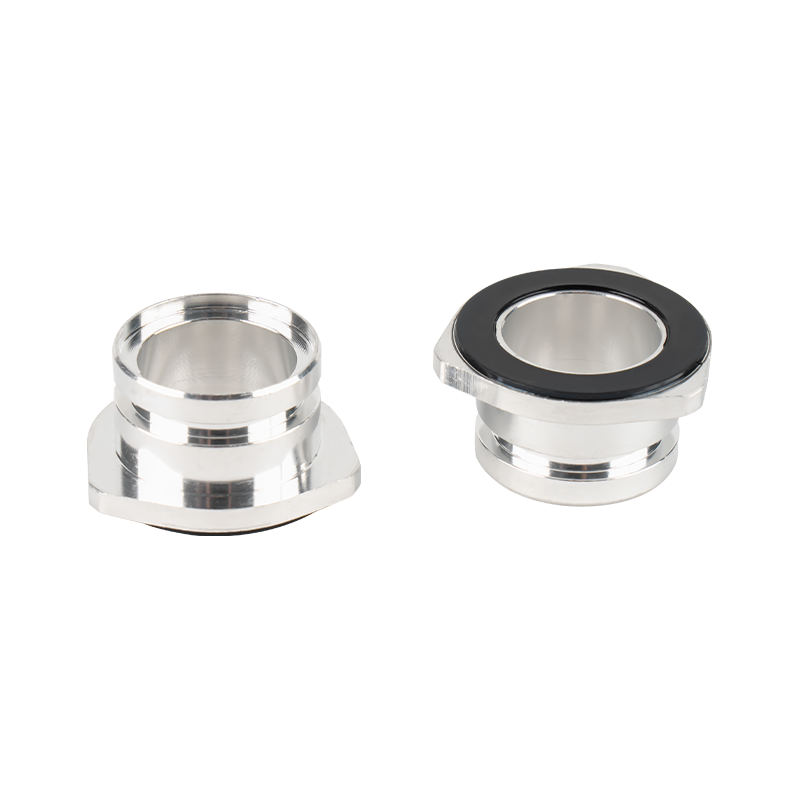
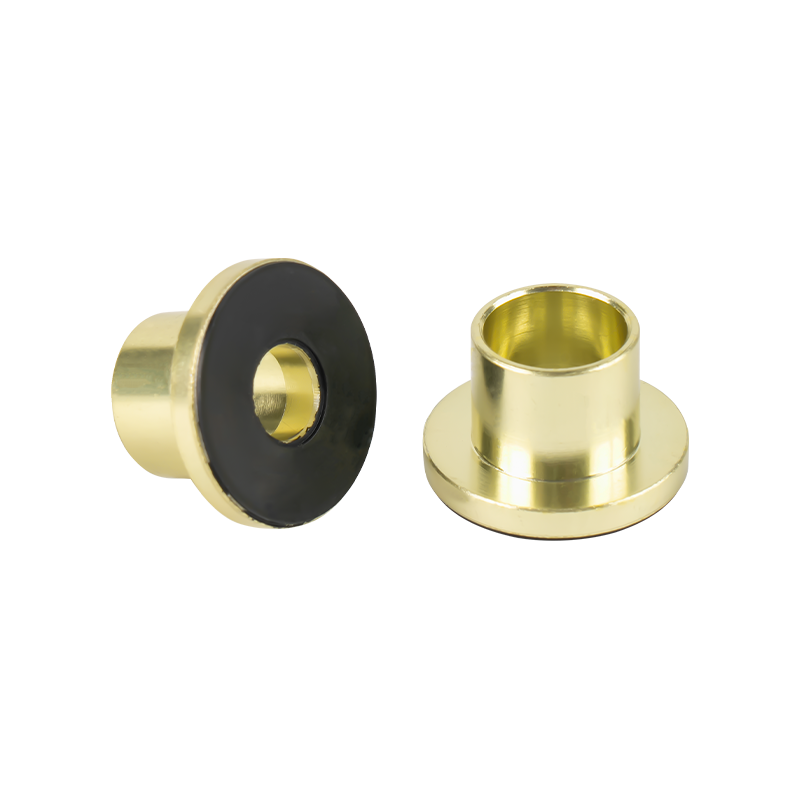
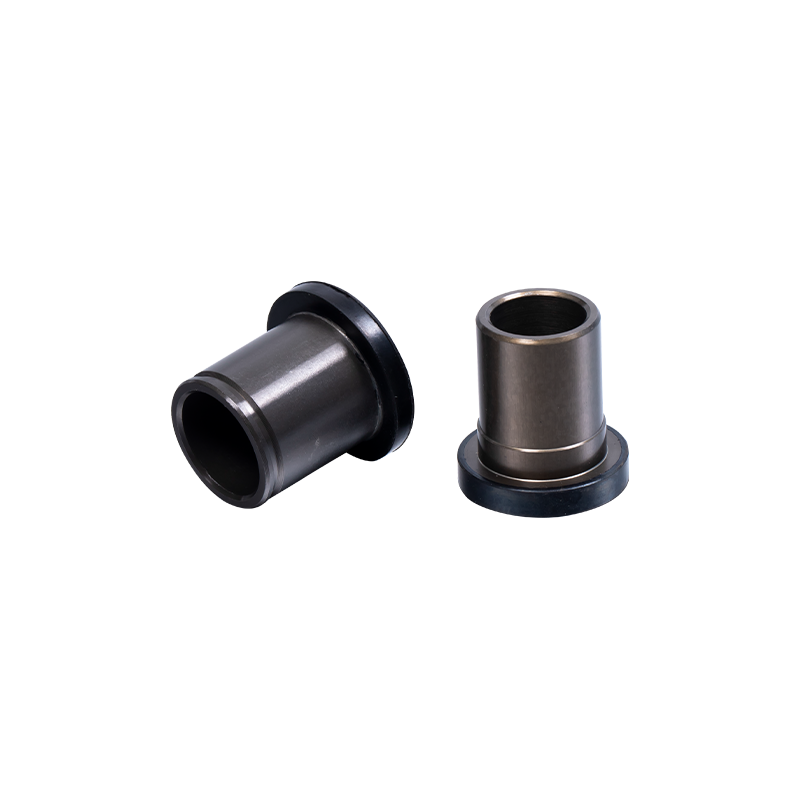
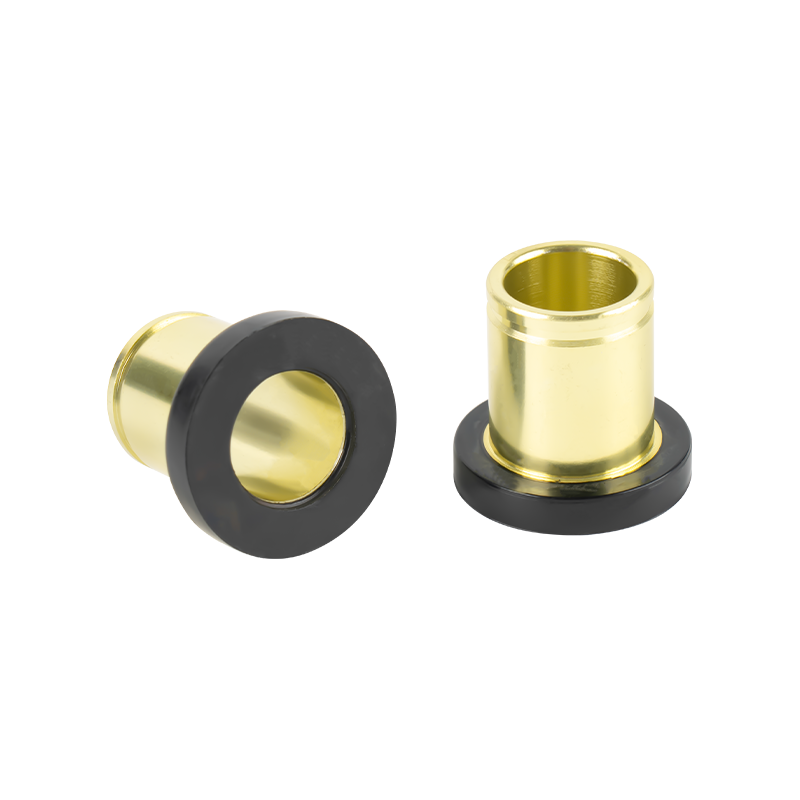
In a pneumatic brake valve the seat is smaller and cooler, but the tolerances are no friendlier. Relay valves, booster valves, main valves and drain valves all depend on a seat face closing against a poppet, piston or plunger. A nick of a few micrometres on that face bleeds air continuously, and the vehicle notices long before the driver does.
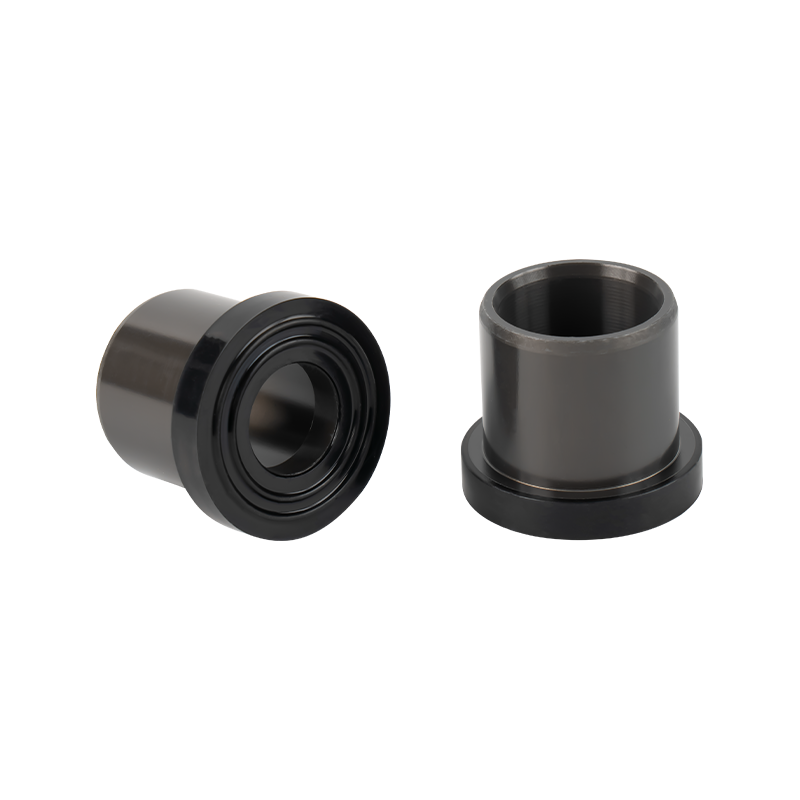
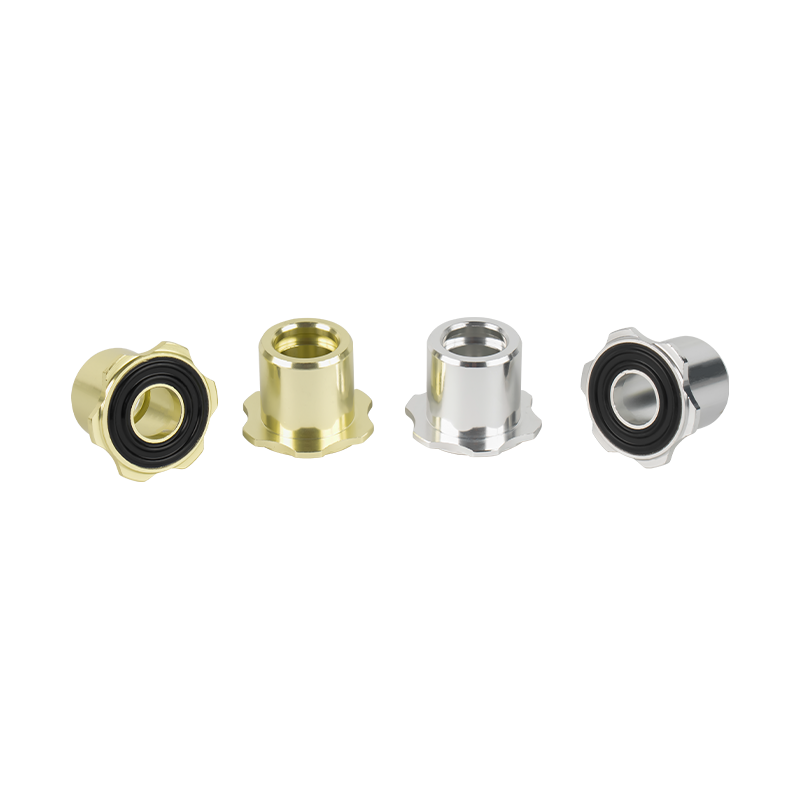
Brake valve seats are usually cut in a single setup so the sealing face stays concentric with the bore, and the acceptance test is a leak test at rated pressure with a fixed hold time rather than a visual inspection. The same seat logic applies: material chosen for moisture and corrosion resistance, controlled contact width, and geometry that stays stable after thousands of actuations. For a closer look at how those seats sit inside the wider unit, see this overview of pneumatic brake valve design.
 Booster ValveThe Booster Valve is a high-performance component designed to enhance the efficiency and responsiveness of pneumatic and hydraulic systems. By optimizing pressure regu...View Product →
Booster valves are a useful example because their seat has to hold a pressure differential rather than simply close a passage, which makes flatness and edge condition measurable in service.
Valve Cylinder Assemblies: Where Seats Meet Pistons
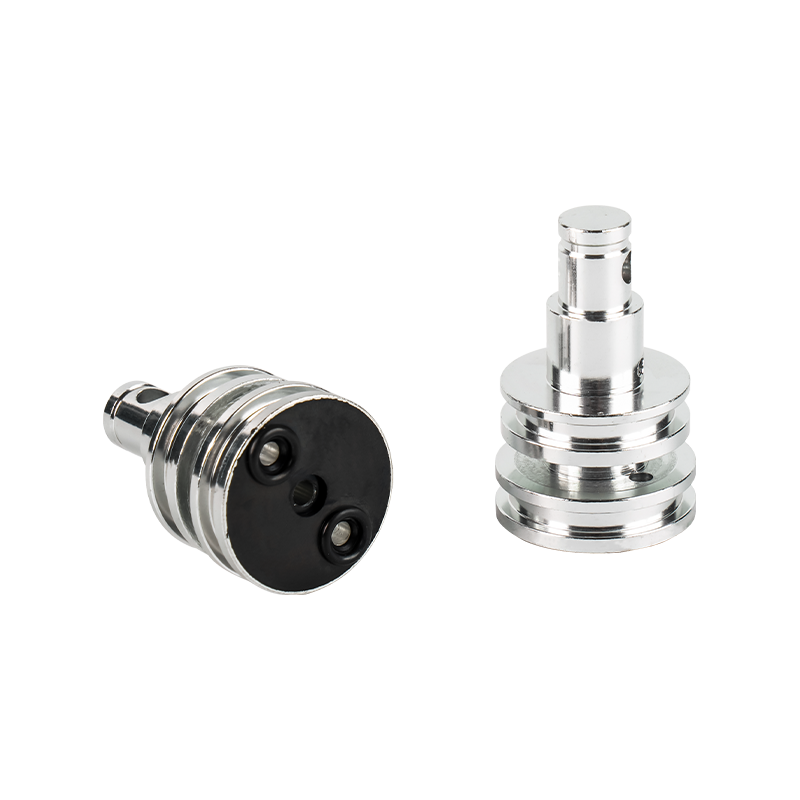
A brake valve rarely fails at the seat alone. In a valve cylinder assembly the seat works against a moving piston, plunger or diaphragm, so sealing is a property of the pair. Drain valve assemblies, automatic drain valves, check valves, safety valve assemblies and oil shutoff cylinders all contain a seat face that must stay flat and concentric through thousands of pressure cycles.
That pairing changes what to inspect. On the seat, check the contact band and any edge damage; on the mating element, check compression set, swelling and embedded grit. A seat that measures perfectly can still leak if the opposing face has taken a set, which is why these units are leak-tested as assemblies. More detail on how the units are built and tested is in this article on valve cylinder assemblies.
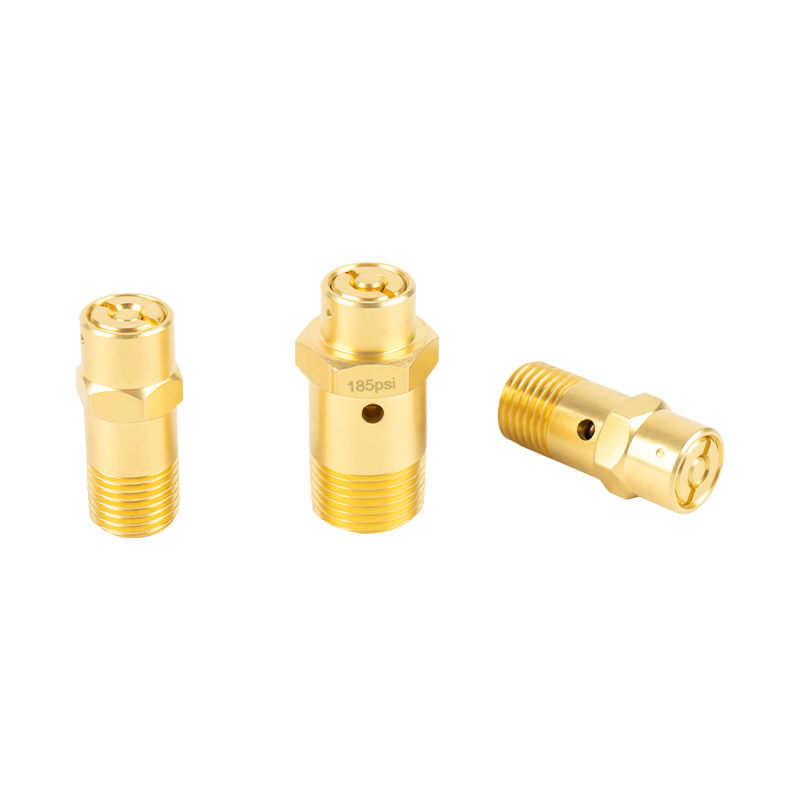 Safety Valve AssemblyThe Safety Valve Assembly is a crucial component designed to protect automotive systems from overpressure by ensuring safe and controlled pressure release. This assemb...View Product →
Machined Parts and Rubber Components Around the Seat
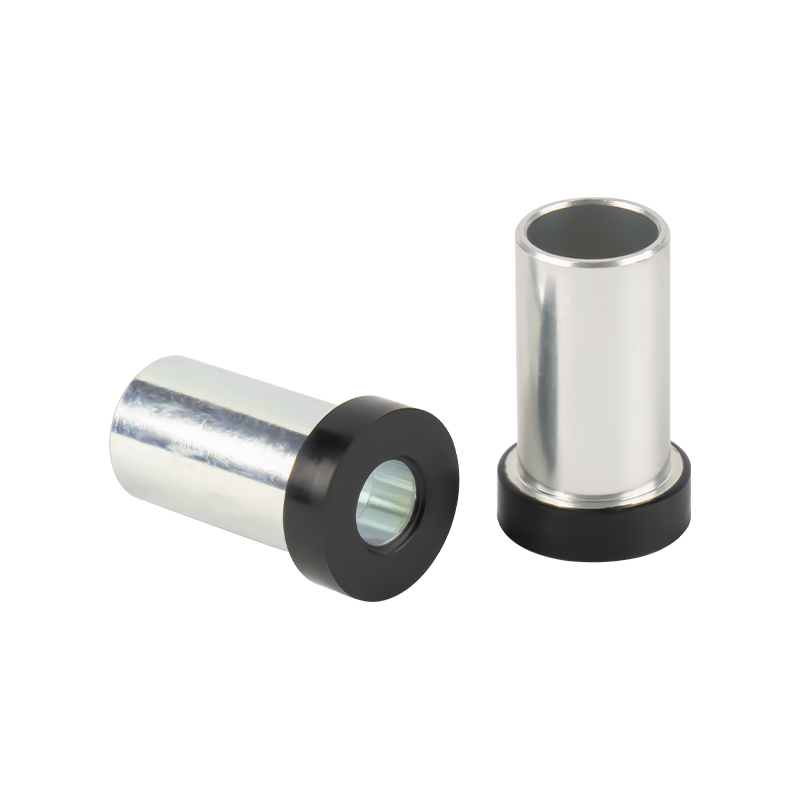
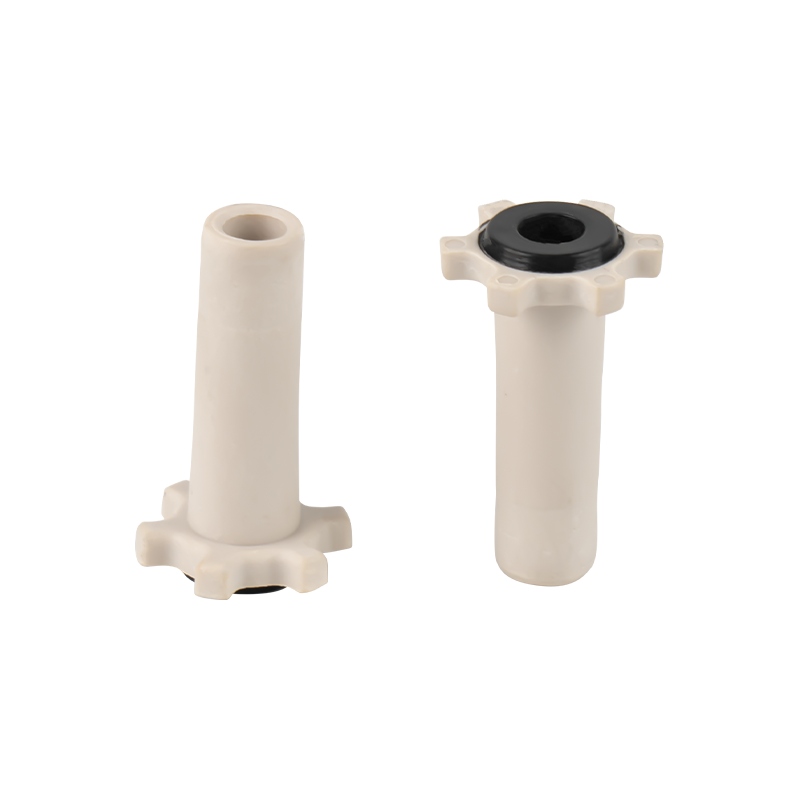
Seats do not work alone in a bill of materials either. Guide sleeves and spring seats position the moving parts, pistons and plungers carry the load, dryer pistons sit inside air treatment units with a fine clearance to hold, and blanking caps and aluminium parts close off the circuit. Each is a machining job measured in hundredths of a millimetre, and each can quietly undo a good seat if it drifts out of tolerance.
Rubber belongs in the same conversation. Parking rubber and rubber pads for construction machinery look like low-risk items, but a pad with the wrong hardness or an element with the wrong compression set changes the force seen by the seat face behind it. When a valve leaks intermittently, the seat is often the last part to fail and the first to be blamed.
 Dryer PistonThe dryer piston is a key component in the dryer system, mainly used to regulate and control the flow of air or fluid during the drying process. It is usually installe...View Product →
Manufacturers such as Yuyao Zhedong Automotive Parts Factory, trading as ZEAST Autoparts, have built their supply position around exactly this mix: brake valve seat series production since September 1988 in Yuyao, Zhejiang, supported by an in-house mould manufacturing centre and hardware, rubber and adhesive workshops. The company states that it has held GB/T19001-2000idt and ISO9001:2000 certification since the early 2000s, supplies customers including FAW, China Second Automobile, Wanxiang Group and several regional valve and brake manufacturers, and exports to more than 30 countries. Its published capacity figures are not identical — one page cites more than 5 million valve seat sets a year, while a company data panel shows 10,000,000+ — and both are company statements rather than audited numbers.
For engine work the checklist stays short: verify the guide before cutting anything, keep runout near 0.025 mm, hold the contact band inside the engine builder's range, and remove as little material as possible. For anyone sourcing seats in volume, the checklist moves to the supplier — material grade with proven hot hardness, angle and width tolerances agreed in writing, runout confirmed by inspection rather than by promise, and lot traceability so a single bad batch can be contained. A valve seat is a small part with an outsized effect on warranty cost, and it deserves to be specified that way.