

 English
 русский
 中文简体
中文简体What are the 5 criteria for the safety valve?
2026-01-26
Content
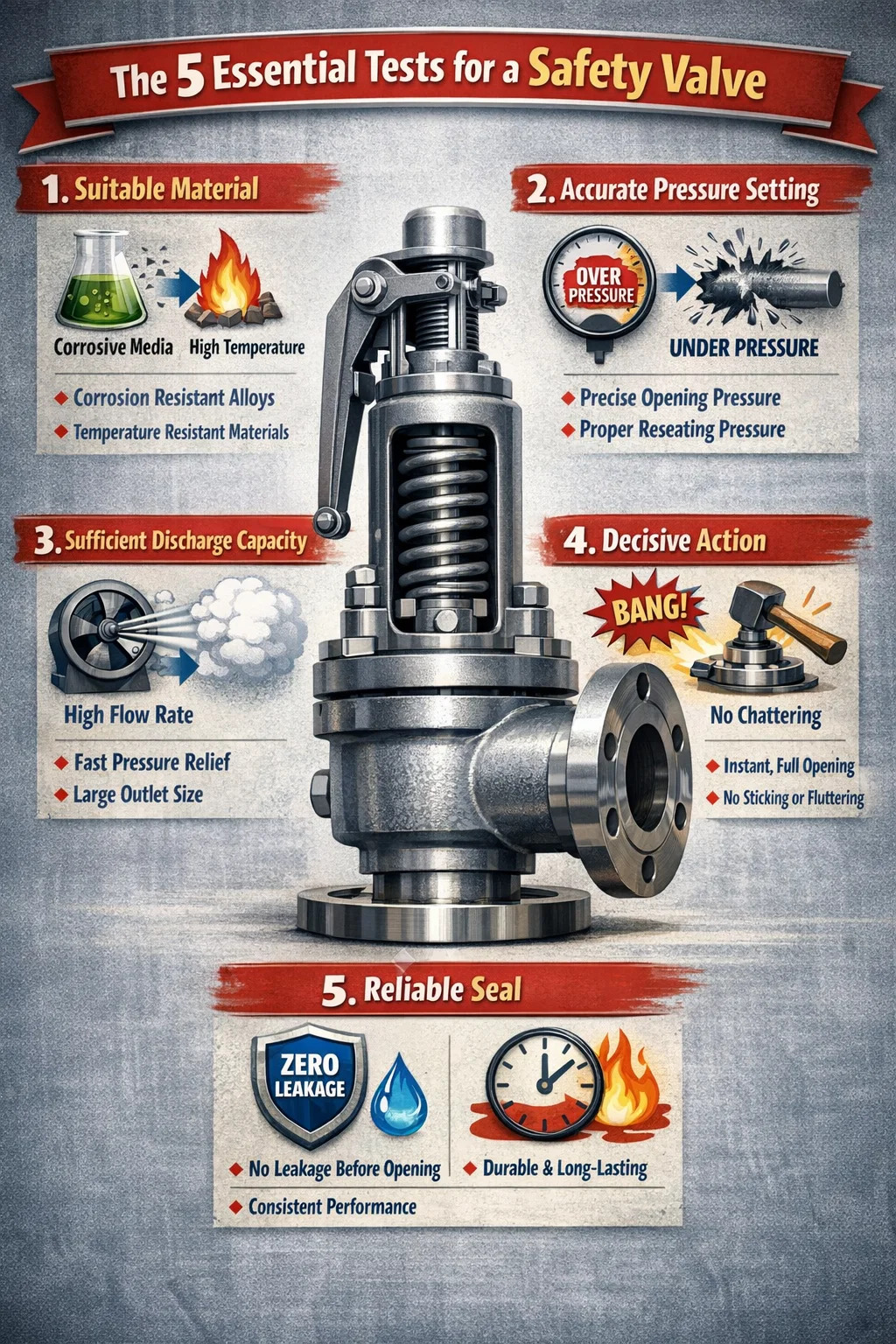
To select and use a safety valve correctly, you must pass these five tests:
1. **The material must be "suitable"**
This is the most basic requirement. You need to consider what is flowing through the pipe.
Corrosion resistance: If the pipe carries acidic or alkaline liquids or corrosive gases, the safety valve's internal components and springs cannot be made of ordinary carbon steel. Stainless steel or even higher-grade alloys must be used; otherwise, it will corrode quickly, leading to leaks or jamming.
Temperature resistance: High-temperature steam and cold water have completely different effects on metals. The material must be able to withstand the operating temperature without deforming or cracking.
2. **The pressure must be "set accurately"**
This is the soul of the safety valve.
Opening pressure: The valve's set opening pressure must be very precise. If it's set too high, the equipment will burst before it reacts; if it's set too low, it will constantly trigger as soon as the machine starts, making it impossible to work.
Reseating pressure: This refers to the pressure at which it closes automatically. It must close tightly and completely, without continuously leaking.
3. **The discharge capacity must be "sufficient"**
This is like an exhaust fan in a house; the larger the house and the more fumes, the more powerful the fan needs to be.
Pressure relief speed: When an accident occurs, the excess pressure generated by the system is very intense. The safety valve's outlet diameter must be large enough to ensure that all the excess medium is discharged in a very short time, preventing the pressure from rising. If the discharge rate is slower than the generation rate, the valve is useless.
4. **The action must be "decisive"**
This refers to the mechanical performance.
No sticking or fluttering: A good safety valve should open completely the moment the pressure is reached (with a distinct "bang"). If it hesitates or opens only partially (this phenomenon is called chattering), not only will the pressure not decrease, but it will also damage the sealing surface inside the valve.
5. **The seal must be "reliable"**
This is its professional quality in normal operation.
Zero leakage: Before reaching the opening pressure, it must act like a solid wall, without any leakage whatsoever. Reliability: Even after working for several years under high temperature and pressure, as long as it hasn't reached its predetermined critical point, it must steadfastly maintain its position, ensuring the smooth operation of the production line and preventing any waste of energy.