

 English
 русский
 中文简体
中文简体What Does a Brake Proportioning Valve Do? Function, Failure Signs, and Specs
2026-10-05
Content
- 1 Why Rear Brakes Need Less Pressure Than the Fronts
- 2 How a Proportioning Valve Produces a Two-Slope Curve
- 3 Proportioning, Pressure Limiting and Load Sensing Are Not the Same Thing
- 4 Combination Valves, Metering Valves and the Check Valve Inside
- 5 Failure Symptoms You Can Actually Verify
- 6 Where the Same Job Gets Done on Air-Braked Trucks
- 7 What to Verify Before Ordering a Replacement
A half-ton pickup with 800 pounds of tile in the bed brakes hard on wet asphalt. The front tires dig in and hold. The rear tires, which carried a comfortable share of the load moments earlier, break loose and lock. The tail steps out, and the driver catches it with a quick counter-steer. That single moment is what a brake proportioning valve exists to prevent.
The short answer: a brake proportioning valve reduces hydraulic pressure going to the rear brakes once line pressure passes a calibrated threshold. Below that threshold it passes pressure through at a 1:1 ratio. Above it, rear pressure keeps climbing, but more slowly than front pressure. The result is rear brake torque that tracks the weight actually sitting on the rear axle during a hard stop, not the weight that was sitting there when the vehicle was parked.
On most vehicles built before the mid-2000s you will find it as a separate brass or cast-iron block threaded into the rear brake line, or built into a combination valve bolted under the master cylinder. On light trucks, vans and some SUVs it is often a load-sensing version with a lever linked to the rear axle. On four-wheel ABS vehicles the job is frequently handled electronically instead.
Why Rear Brakes Need Less Pressure Than the Fronts
Braking is a weight-transfer event. The harder you decelerate, the more load the front axle carries and the less the rear axle carries, even though nothing physical moves between them. Tire grip follows load, so the front tires gain traction while the rear tires give it up.
Take a 4,200 lb sedan with a 118-inch wheelbase and a center of gravity roughly 22 inches above the road, braking at 0.75 g:
| Axle | Static load (lb) | Load at 0.75 g (lb) | Share of total |
|---|---|---|---|
| Front | 2,100 | 2,687 | 64% |
| Rear | 2,100 | 1,513 | 36% |
If both axles received identical hydraulic pressure through identically sized calipers, the rear brakes would reach their lock-up threshold long before the fronts. And because tire grip does not scale perfectly linearly with load, the real gap is even wider than the table suggests. Locked rear tires are the dangerous outcome: a sliding rear axle cannot resist yaw, so the vehicle wants to spin rather than stop straight.
How a Proportioning Valve Produces a Two-Slope Curve
A fixed proportioning valve is mechanically simple: a stepped bore, a piston, a calibrated spring, and a pair of fluid chambers. What makes it useful is that it does not simply cap rear pressure. It bends the pressure curve.
- Below the split point. Spring preload holds the piston in its rest position. Fluid passes straight through, so front and rear line pressures rise together at a 1:1 ratio.
- At the split point. Input pressure acting on the piston face generates enough force to overcome the spring. This is the knee of the curve, sometimes called the split point or crack point.
- Above the split point. The piston moves and closes the direct passage. Any further pressure increase now acts on a larger effective area, so output pressure rises at a reduced rate set by the bore area ratio.
What the numbers mean in practice
Split points commonly land between 300 and 600 psi, with slopes typically between 0.2 and 0.5. A valve with a 400 psi split point and a 0.4 slope behaves like this: at 1,000 psi of master cylinder pressure, rear line pressure is 400 + (1,000 − 400) × 0.4, which works out to 640 psi. The rear brakes are still working hard, just not as hard as the fronts.
Why not simply cap the pressure
A flat ceiling would leave the rear brakes under-used whenever the vehicle is loaded. A two-slope curve keeps the rear brakes contributing to total stopping force across a wider range of load and deceleration, which is why proportioning replaced simple limiting on most passenger applications.
Proportioning, Pressure Limiting and Load Sensing Are Not the Same Thing
Parts catalogs blur these categories, but they behave differently on the road. Buyers specifying hardware should check which curve they are actually buying.
| Type | What it controls | Rear pressure curve | Typical application |
|---|---|---|---|
| Fixed proportioning valve | Pressure above a set split point | Two slopes: 1:1, then reduced | Cars and light trucks, 1970s to 2000s |
| Pressure-limiting valve | A hard ceiling on rear pressure | 1:1, then flat | Older vehicles and some utility trucks |
| Load-sensing valve | Pressure plus rear axle load | Split point rises as springs compress | Vans, pickups, SUVs on leaf springs |
| Electronic brake distribution | Rear pressure per wheel, continuously | Recalculated many times per second | Four-wheel ABS vehicles since the mid-2000s |
The durability of any of these designs comes down to the spring and the seal. Spring preload sets the split point, and a preload that drifts by a few percent shifts the whole curve. That is why reputable suppliers quote calibration data rather than just port sizes and thread pitches.
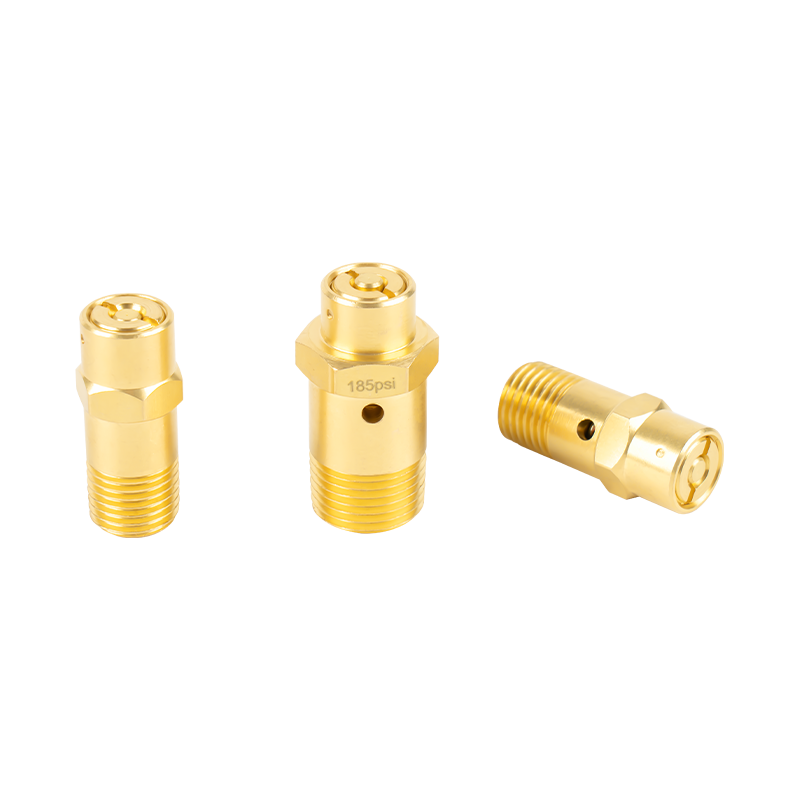 Safety Valve AssemblyThe Safety Valve Assembly is a crucial component designed to protect automotive systems from overpressure by ensuring safe and controlled pressure release. This assemb...View Product →
Combination Valves, Metering Valves and the Check Valve Inside
When a proportioning valve is built into a combination valve, it shares a housing with three other functions, and each one affects pedal feel:
- Metering or hold-off valve: delays front disc application until roughly 75 to 300 psi of line pressure, giving rear drum brakes a moment to overcome return spring tension and start working. Without it, front discs bite first and the vehicle noses over on light pedal applications.
- Pressure differential switch: a piston that moves when one hydraulic circuit loses pressure relative to the other, grounding the brake warning lamp on the dashboard.
- Residual pressure check valve: holds a small amount of pressure in the lines, around 2 psi for disc circuits and up to 10 psi for drum circuits, to keep cup seals seated against their bores.
The check valve is the simplest of the group and the one most often mistaken for a proportioning valve during diagnosis, because both live in the same housing. A failed check valve shows up as a spongy pedal or a slow pressure bleed-down rather than rear-wheel lockup.
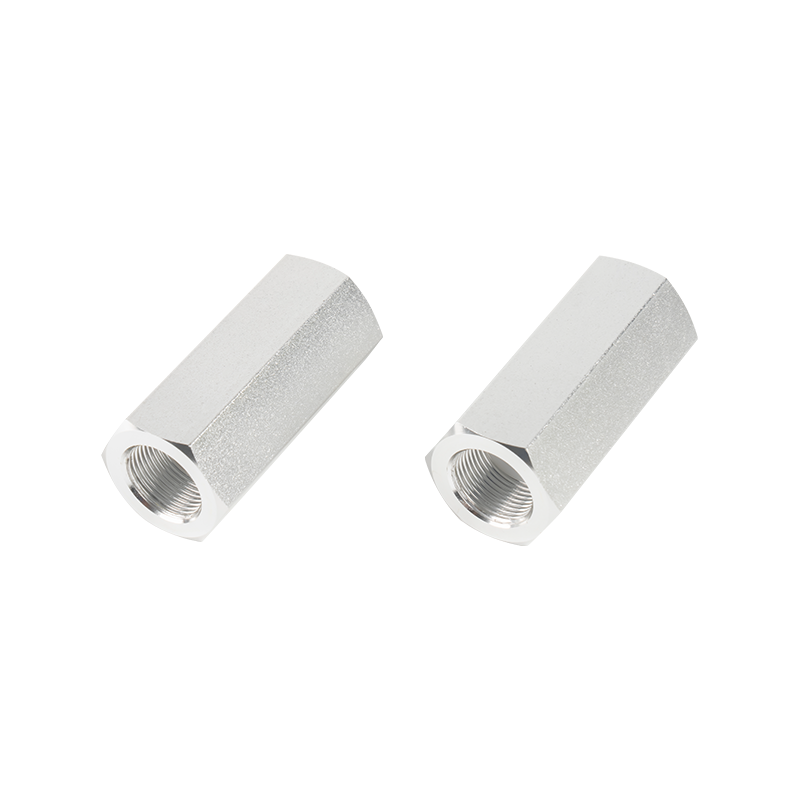 Automobile Check ValveThe Automobile Check Valve is an important component used in automobile engines and fuel systems. Its main function is to ensure that the fluid can only flow in one di...View Product →
Failure Symptoms You Can Actually Verify
Proportioning valves fail in two directions: they stop reducing pressure, or they reduce too much. Both are diagnosable without guessing.
- Rear tires chirp or lock before the fronts under moderate braking, particularly with an empty bed or trunk.
- Flat-spotted rear tires, or a skipping sensation felt through the body rather than the steering wheel.
- Rear brakes wearing far more slowly than the fronts, which points to a valve stuck in the reducing position.
- Wetness or crystallized fluid residue around the valve body and its fittings.
- A brake warning lamp that stays lit on vehicles using a pressure differential switch.
- Rear lockup that appeared immediately after a suspension repair, lift kit or spring replacement. On load-sensing valves this is almost always a linkage that was never re-adjusted to the new ride height.
The definitive test is straightforward: install pressure gauges at a front bleeder and a rear bleeder, apply pedal force in slow increments, and record where the rear curve departs from the front. Compare the measured split point against the specification. It takes about twenty minutes and removes all doubt.
Where the Same Job Gets Done on Air-Braked Trucks
Commercial vehicles with air brakes do not use hydraulic proportioning valves, but the underlying problem, keeping rear braking force matched to rear axle load, has to be solved somewhere. On those vehicles the work is split across several components.
The relay valve is the closest functional relative. It receives a low-pressure control signal from the treadle valve and delivers reservoir pressure to the service chambers in proportion to that signal, so a light pedal produces a light brake application without the driver having to modulate a large volume of air. Load-sensing valves on the rear axle then raise or lower the delivered pressure according to suspension deflection, which is the pneumatically equivalent idea to a height-sensing proportioning valve. Reservoir safety valves handle a different job entirely: they cap system pressure so a failed unloader or governor cannot over-pressurize the circuit.
Because these valves sit in the safety path, tolerances on the bore, the piston return spring and the diaphragm compound are what separate a reliable unit from a short-lived one. It is worth understanding the full family before specifying replacements for a fleet, and a general overview of relay valves and other pneumatic brake valves is a useful starting point.
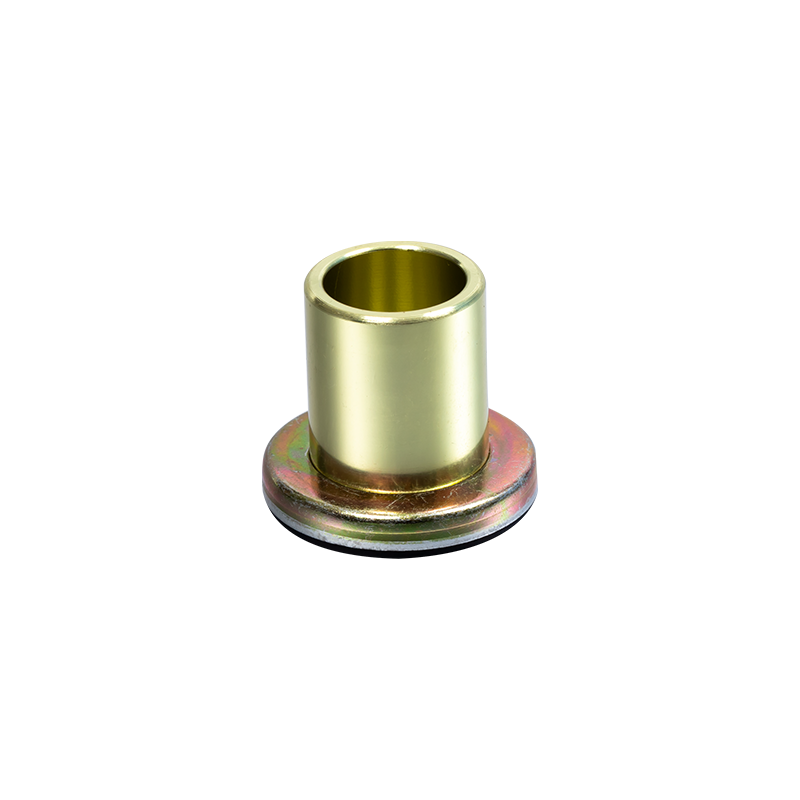 Brake King Relay ValveThe Brake King Relay Valve is an essential component for managing air flow and pressure in automotive and pneumatic braking systems. Designed for high reliability and ...View Product →
What to Verify Before Ordering a Replacement
A proportioning valve is a calibrated assembly, not a fitting. Two valves with identical threads and mounting holes can carry completely different curves. Before committing to a purchase order, confirm the following:
- Split point and slope. Ask for the calibration curve, not just the part number. A valve calibrated for a different gross vehicle weight will either under-brake the rear axle when loaded or lock it when empty.
- Seal material compatibility. Hydraulic brake fluid attacks the wrong elastomer quickly. EPDM is the baseline for DOT 3 and DOT 4 service; anything else needs justification.
- Spring consistency. The spring sets the split point. A tolerance of plus or minus 5% on preload moves the curve measurably, so ask what the supplier holds in production and how it is verified.
- Load-sensing linkage. If the valve is height-sensing, confirm whether the bracket and lever come with it and whether the linkage is adjustable for the target ride height.
- Batch traceability and pressure test records. For fleet and OEM programs, a supplier that cannot produce proof-test data per batch creates warranty exposure that outweighs any unit-price saving.
This is the discipline behind the valve and cylinder hardware made by ZEAST Autoparts, the trading identity of Yuyao Zhedong Automotive Parts Factory in Yuyao, Zhejiang, a brake valve and valve-seat manufacturer operating since September 1988. The factory runs its own mold manufacturing center alongside metalworking, rubber and bonding workshops, holds GB/T19001-2000 idt and ISO 9001:2000 certification, and supplies valve seats, valve assemblies, machined parts and rubber components to vehicle and assembly manufacturers including First Automobile Works and Dongfeng, with exports to more than 30 countries. For buyers sourcing pressure-control components, that combination of in-house tooling and long-running OEM supply experience is usually the deciding factor.
A brake proportioning valve does one narrow job, and it does it quietly for decades at a time. It keeps rear brake pressure below the level that would lock a lightly loaded rear axle, by bending the pressure curve rather than capping it. When it fails, the symptoms show up in the rear tires first: chirping, flat spots, and a tail that wants to lead the nose.
Whether you are diagnosing a hydraulic system on a passenger vehicle or specifying pneumatic brake valves for a commercial fleet, the same principle applies. Rear braking force has to follow the load on the rear axle, and the component that enforces that relationship deserves to be selected on calibration data, not on thread size alone.