

 English
 русский
 中文简体
中文简体What is the difference between a safety valve and a PRV? Detailed explanation of the difference
2025-12-22
Content
Although safety valves and pressure relief valves (PRVs) look very similar and are even used interchangeably in many situations, they actually have significant differences in their characteristics and operating principles.
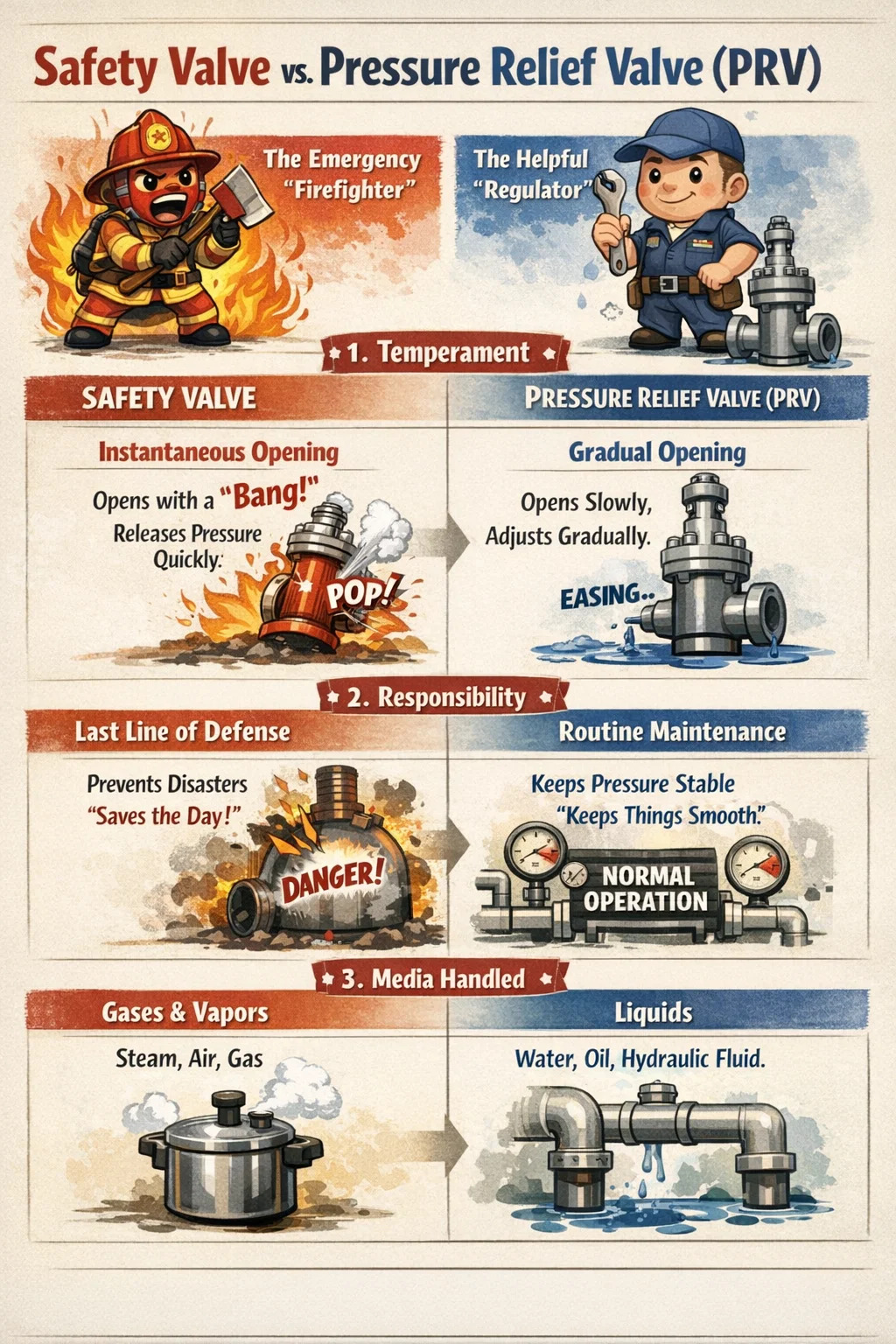
You can think of them as two different types of "bodyguards": one is a helpful assistant that regulates things on a regular basis, while the other is an emergency firefighter who only intervenes when absolutely necessary.
1. Different Temperaments: Instantaneous Opening vs. Gradual Opening
Safety Valve: It has a very explosive temperament. Once the pressure in the system reaches the set point, it will open completely with a "bang." Its goal is to release the excess pressure as quickly as possible, like a vanguard, acting very decisively.
Pressure Relief Valve (PRV): Its character is more gentle and rational. It doesn't open all at once, but opens gradually in proportion to how much the pressure exceeds the set point. If the pressure is slightly high, it opens a little to release some pressure; if the pressure is higher, it opens a little more.
2. Different Responsibilities: Last Line of Defense vs. Routine Maintenance
Safety Valve: It is usually considered the last line of defense. Only when other control devices fail and the situation is very critical will it jump in to "save the day." Its primary task is to prevent serious damage to the equipment due to excessive pressure.
Pressure Relief Valve: It is more like a pressure regulator. Its purpose is to keep the pressure in the system within a stable and comfortable range. In daily operation, it may open and close frequently, helping the system "breathe" and preventing large pressure fluctuations.
3. Different Media Handled: Gases vs. Liquids
Safety Valve: It is best suited for handling gases and vapors, which are prone to expansion. Because excessive pressure in gases can have serious consequences, its instantaneous discharge capability is necessary. Common examples include the safety valve on a home pressure cooker or a large steam boiler.
Pressure Relief Valve: It is more commonly found in liquid systems, such as water pipes and hydraulic oil lines. Liquids do not expand as violently as gases, so releasing a portion of the liquid gradually to reduce pressure is effective without causing a significant shock to the system.