

 English
 русский
 中文简体
中文简体How to Reset Brake Proportioning Valve – Step-by-Step Guide
2026-06-01
Content
- 1 What a Brake Proportioning Valve Actually Does
- 2 Symptoms That Tell You the Valve Is Tripped
- 3 Why Automotive Brake Valves Trip During Normal Service
- 4 How to Reset Brake Proportioning Valve – Three Methods in Order
- 5 How to Bleed Brakes Without Tripping the Proportioning Valve
- 6 Fixed vs. Adjustable Automotive Brake Valves
- 7 When to Replace Rather Than Reset
- 8 Common Questions About Brake Proportioning Valve Resets
- 8.1 Can I drive with a tripped proportioning valve?
- 8.2 Why does my proportioning valve keep tripping after every brake bleed?
- 8.3 My brake light came on while driving, not during a bleed. Is it the proportioning valve?
- 8.4 How long does a proportioning valve last?
- 8.5 Does the proportioning valve need adjustment after lowering a vehicle?
If your brake warning light is on or you're getting no fluid at the bleeders after brake work, the fix is usually straightforward: press the brake pedal three times with firm, steady pressure to re-center the pressure differential valve inside the proportioning valve. That single action resolves the majority of tripped-valve situations. If the light stays on after that, a bleeder-screw method or manual re-centering is needed — both explained in full below.
Automotive brake valves sit at the heart of every hydraulic braking system, and the proportioning valve specifically is what keeps your rear wheels from locking up under hard braking. When this component trips — often during brake bleeding — the entire rear or front circuit can go dead. This guide walks through every reset method in order of difficulty, covers the symptoms that tell you the valve is tripped, and explains when replacement is the smarter call.
What a Brake Proportioning Valve Actually Does
Automotive brake valves come in several types — metering valves, residual pressure valves, combination valves — but the proportioning valve handles one specific job: limiting hydraulic pressure to the rear brakes once a defined threshold is crossed. Under light braking at low speeds, weight transfer is minimal, so the rear brakes can contribute effectively. As pedal pressure increases, vehicle weight shifts forward, reducing rear-tire grip. If rear brake pressure isn't controlled, the rear wheels lock before the fronts, causing a spin.
The proportioning valve prevents this. It allows full pressure below its cut-in point — typically around 300–500 psi depending on vehicle design — and then limits any additional pressure rise to the rear circuit. On disc/drum vehicles (front disc, rear drum), the cut-in is usually lower because drum brakes generate more self-energizing force than disc brakes at equivalent line pressure.
Inside most GM-style and OEM-equivalent proportioning valves is a pressure differential valve — a small shuttle piston that sits centered between the front and rear brake circuits. Under normal operation, pressure is equal on both sides and the piston stays centered. If pressure drops sharply on one side — as in a brake line failure — the piston is pushed to the low-pressure side, triggering the brake warning light switch and blocking fluid flow through the failed circuit. This is a deliberate safety feature, but it can also be accidentally triggered during brake bleeding.
- Cut-in pressure: ~300–500 psi (varies by vehicle)
- Prevents rear wheel lockup during hard stops
- Contains a pressure differential valve (shuttle piston)
- Triggers brake warning light when tripped
- Common on disc/drum and disc/disc brake systems
Symptoms That Tell You the Valve Is Tripped
Before attempting any reset, confirm the proportioning valve is actually the problem. Several symptoms point directly to a tripped pressure differential valve inside the unit.
Brake Warning Light On
The most obvious sign. The dash warning light illuminates because the pressure differential valve piston has shifted off-center and is pressing against the warning switch. On most vehicles this is the red BRAKE light, not the ABS light.
No Fluid at One Set of Bleeders
You press the pedal, the master cylinder reservoir is full, but no fluid comes out of either the front or rear bleeders. This is the classic sign that the differential piston has shifted and is blocking flow to that circuit. Fluid still reaches the other circuit normally.
Spongy or Unresponsive Pedal
If the tripping event happened during normal driving rather than a bleed, you may notice a soft pedal, longer stopping distances, or a pedal that travels farther than normal before generating braking force.
Uneven Braking or Pulling
With one circuit blocked or restricted, brake force is unbalanced. The vehicle may pull hard to one side under moderate braking, or the rear brakes may feel ineffective while the fronts lock up prematurely.
Confirming the Valve Is Tripped with a Test Light
You can verify the valve position without removing anything. Connect a standard 12V automotive test light — clamp to the battery's positive terminal, touch the probe to the brake warning switch terminal on the proportioning valve. If the test light illuminates, the differential piston is off-center and the valve needs resetting. If the test light stays dark, the piston is centered and the warning light is being triggered by something else (low fluid level, parking brake switch fault, ABS sensor issue).
Why Automotive Brake Valves Trip During Normal Service
Understanding why the valve trips helps you prevent it — and helps you explain the situation clearly if you're working with a shop.
| Cause | Why It Trips the Valve | How Common |
|---|---|---|
| Manual pedal bleeding | Uneven pressure when one bleeder is open creates a pressure differential the valve reads as a line failure | Very common |
| Brake line replacement | Air in the new line causes sudden pressure drop in that circuit | Common |
| Caliper or wheel cylinder replacement | System opened to atmosphere; pressure imbalance during first bleed | Common |
| Actual brake line failure | Rapid pressure loss on failed circuit; valve trips by design to preserve partial braking | Less common but serious |
| Old, moisture-contaminated fluid | Corrosion inside valve housing causes piston to stick off-center after any pressure event | Moderate — older vehicles |
| Pressure bleeder used incorrectly | Excessive tank pressure or wrong sequence trips the differential piston | Occasional |
If the cause was an actual line failure, do not attempt to reset the valve until the failed line is repaired and all leaks are fixed. Resetting the valve on a compromised system restores fluid flow to a failed circuit, eliminating the one safety function the valve was performing.
How to Reset Brake Proportioning Valve – Three Methods in Order
Work through these methods in sequence. Most situations resolve with Method 1. Method 3 is for stubborn or corroded valves on older vehicles.
Pedal-Only Reset (Works in Most Cases)
This is the correct first step after any brake bleed that trips the warning light. The process equalizes pressure on both sides of the differential piston, allowing the spring inside the valve to push the piston back to center.
- Confirm the master cylinder reservoir is full. Top off with the correct DOT-rated fluid if needed.
- Start the engine to activate the power brake booster (if equipped). This isn't strictly required but produces more consistent pedal pressure.
- Apply firm, even pressure to the brake pedal — not a stomp, not feathering. Hold the pedal down for two to three seconds, then release.
- Repeat two more times for a total of three applications.
- Check the dash. If the brake warning light has gone out, the valve has re-centered and the reset is complete.
- Test the brakes by pressing the pedal firmly. It should feel solid with normal resistance, not spongy or low.
If the light goes out but the pedal still feels soft, air remains in the system and a full bleed is still needed. Use Method 2 to bleed correctly without re-tripping the valve.
Bleeder Screw Reset (When Method 1 Fails)
This technique uses a 12V test light to watch the valve in real time while you selectively open bleeder screws to equalize pressure. You need an assistant for this procedure.
- Connect a 12V test light between the battery positive terminal and the brake warning switch on the proportioning valve.
- Confirm the test light is on — this verifies the valve is tripped and the circuit is ready to monitor.
- Have your assistant sit in the vehicle and press the brake pedal slowly and steadily until reaching moderate resistance. Hold that pressure.
- Open a bleeder screw on the circuit that still has fluid flowing (the non-blocked side) — usually this is a front bleeder if the rear circuit is blocked, or a rear bleeder if the front is blocked. Open just enough to release fluid — a quarter turn is sufficient.
- Watch the test light. When the piston re-centers, the test light will go out. The instant it goes out — close the bleeder immediately. Do not delay or the piston will shift to the other side.
- Have the assistant slowly release the pedal.
- Refill the master cylinder. Check dash warning light — it should now be off.
- Proceed with a standard brake bleed using a pressure bleeder or two-person method, working all four corners.
If the light is still on after closing the bleeder, the piston may have overshot to the other side. Repeat the process using a bleeder on the opposite axle.
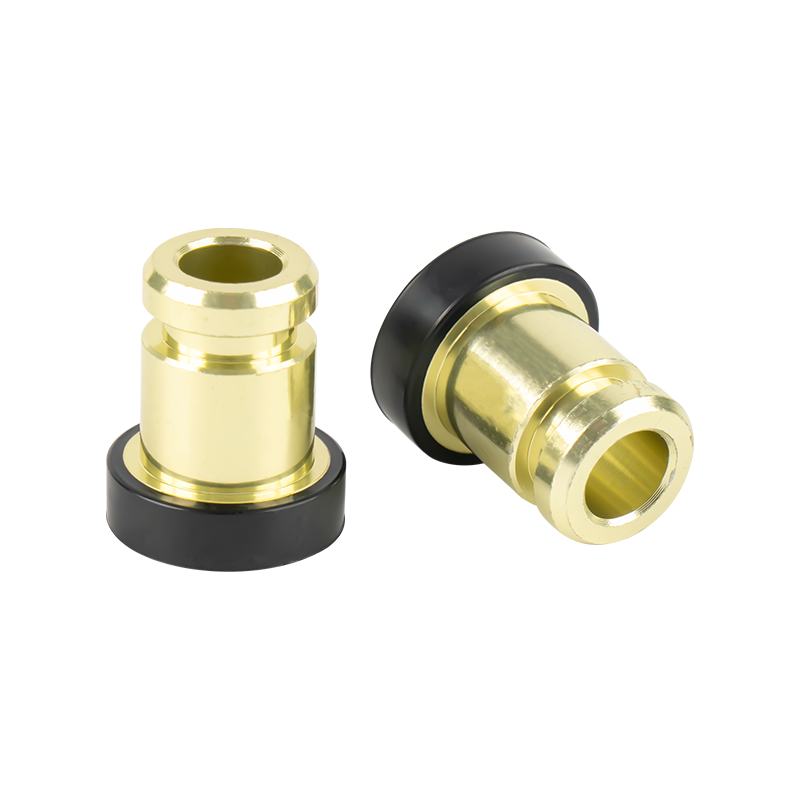
Manual Piston Re-centering (Older or Corroded Valves)
On vehicles with significant age or moisture-contaminated brake fluid, corrosion can cause the differential piston to stick off-center even after the pressure differential is equalized. Methods 1 and 2 won't work because the piston physically can't spring back. In this case, the valve needs to come off the vehicle for direct intervention.
- Place shop towels under the valve and have a container ready. Disconnect the brake warning switch wiring connector.
- Remove the warning switch from the valve body — on most GM-style valves this is a threaded hex plug. A 1-inch wrench is usually required.
- Once the switch is removed, the center piston is visible through the switch port. Using a small pick tool or blunt rod, gently push the piston back to the centered position.
- Reinstall the warning switch. Torque to spec — typically 10–15 ft-lb. Over-tightening cracks the valve body.
- If the valve was removed from the vehicle for this step, reinstall it and reconnect all brake lines, torquing line fittings to 11–13 ft-lb (ISO flare) or 13–17 ft-lb (double flare).
- Bleed the entire brake system, starting with the rear brakes. Keep pedal pressure slow and steady to avoid re-tripping the valve.
If the piston moves but the valve still trips immediately during bleeding, the internal spring is likely weakened or the piston bore is corroded beyond recovery. Replacement is the right call at this point.
How to Bleed Brakes Without Tripping the Proportioning Valve
The most common reason people end up needing a proportioning valve reset is improper bleeding technique. These practices prevent the valve from tripping in the first place.
Use a Pressure Bleeder
A pressure bleeder applies equal pressure to the entire system simultaneously from the master cylinder reservoir. Because both circuits stay pressurized evenly, the differential piston has no reason to shift. This is the single most effective way to prevent valve tripping during a bleed. Set pressure to 10–15 psi — higher pressure can damage seals and cause the valve to trip anyway.
Open Multiple Bleeders Together
When doing a manual pedal bleed, open one front and one rear bleeder simultaneously before pressing the pedal. This keeps both circuits at similar pressure levels, reducing the differential the valve sees. Close both bleeders before releasing the pedal.
Keep Pedal Strokes Slow
Fast, hard pedal strokes create pressure spikes. The differential piston responds to rapid pressure changes — a sudden drop in one circuit from a hard stomp reads to the valve exactly like a line failure. Slow, deliberate pedal application reduces the peak differential the piston experiences.
Never Let the Reservoir Run Low
Air entering the master cylinder through an empty reservoir reaches the proportioning valve almost immediately. Once air is in the valve body, it takes significant pedal work to push it out — and that work often trips the differential piston along the way. Check fluid level every three to four pedal strokes.
Bleed in the Correct Order
On disc/drum systems, bleed the rear drums first, then the fronts. On four-wheel disc systems, the standard sequence is right rear, left rear, right front, left front — furthest from the master cylinder first. Correct sequence minimizes the pressure differential across the valve during the process.
Use a Combination Valve Bleed Tool
Specialty bleed tools for combination valves physically hold the differential piston centered during the bleed process. They thread into the warning switch port and prevent the piston from moving regardless of pressure differentials. These tools cost under $20 and eliminate valve-tripping entirely on problematic vehicles.
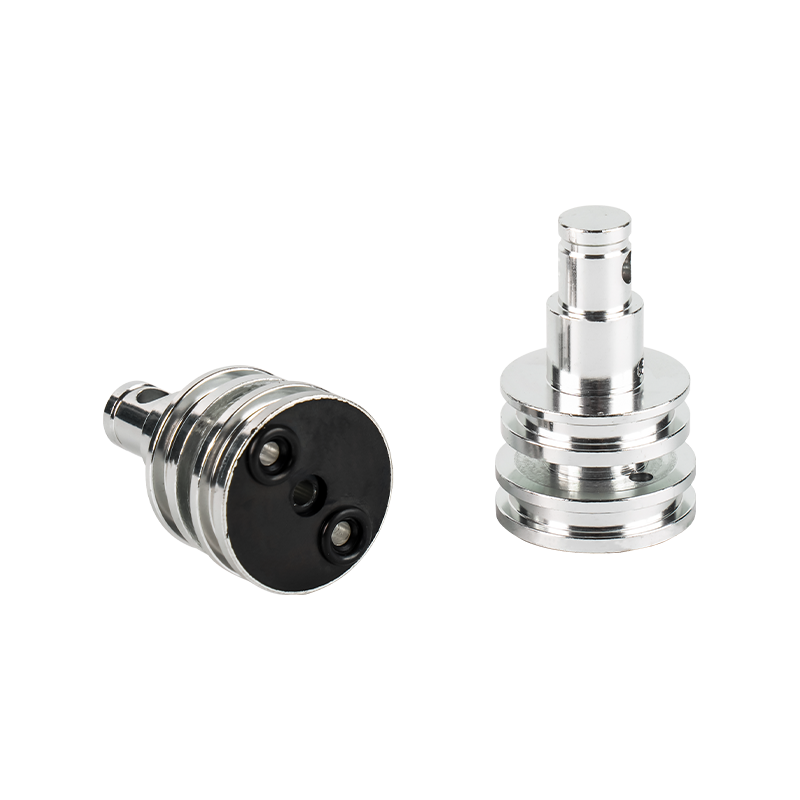
Fixed vs. Adjustable Automotive Brake Valves
Not all proportioning valves work the same way, and the reset procedure can differ slightly depending on which type your vehicle uses.
Factory-installed on the vast majority of street vehicles. The cut-in pressure and slope ratio (how much rear pressure rises per unit of additional input pressure above the cut-in point) are set permanently at manufacture. Cannot be adjusted without replacement. On most vehicles built before the widespread adoption of ABS and electronic brake force distribution, a combination valve — combining metering, proportioning, and pressure differential functions in one unit — was standard.
Reset procedure: Methods 1, 2, or 3 above. No adjustments needed after reset.
Common on custom builds, track vehicles, and vehicles with non-stock brake upgrades (for example, a rear drum-to-disc conversion). An external knob or adjuster lets you change the rear brake bias without replacing the valve. These valves typically don't have a pressure differential valve, so they don't trip in the same way — but they do require adjustment after installation or if the brake setup changes.
After any suspension modification that changes vehicle weight distribution, an adjustable proportioning valve should be re-tuned on a skid pad or through systematic on-road testing. Rear brake bias that was correct with stock springs may lock the rears prematurely after a lowering kit or heavier payload setup.
Does ABS Eliminate the Need for a Proportioning Valve?
On vehicles with full four-channel ABS, the ABS modulator handles brake force distribution electronically, and a traditional proportioning valve is either absent or replaced with a simple residual pressure valve. However, ABS does not eliminate the proportioning function — it replaces it. If the ABS system fails or is bypassed, rear wheel lockup under hard braking becomes a real risk without some form of proportioning. Vehicles converted from ABS to non-ABS brakes need an aftermarket proportioning valve added to the rear circuit.
When to Replace Rather Than Reset
Resetting a proportioning valve works when the differential piston has shifted position but the valve itself is otherwise functional. Some situations call for replacement instead.
- External leaks: Any wetness, staining, or seeping around the valve body, line ports, or warning switch port means internal seals have failed. Resetting a leaking valve accomplishes nothing — brake fluid will continue to escape under pressure.
- The valve trips immediately after every reset: If you reset successfully and the light returns within the first brake application, the differential piston bore is corroded or the spring is compromised. The valve cannot maintain center position.
- Manual re-centering is impossible: The piston through the switch port is frozen in place despite penetrating oil application. Forcing it risks cracking the valve body.
- Visually damaged valve body: Cracks, stripped threads at the line ports, or physical damage from road debris are grounds for immediate replacement.
- Heavily contaminated fluid history: If the vehicle has years of neglected fluid — dark, silty, water-logged brake fluid — internal corrosion in the valve may be extensive. At this stage, replacement combined with a full system flush is more reliable than reset attempts.
Replacement proportioning valves for common applications — GM trucks, muscle cars, imported vehicles — are widely available. For a like-for-like replacement, match the number of brake line ports and the inlet/outlet thread sizes. On combination valves (which integrate metering and differential functions), always replace with an identical combination valve, not a stand-alone proportioning valve. The metering function is critical for disc/drum systems and cannot be omitted.
Common Questions About Brake Proportioning Valve Resets
Can I drive with a tripped proportioning valve?
Only for very short distances in an emergency. With the differential valve piston off-center, one brake circuit may have reduced or no hydraulic pressure. Stopping distances increase significantly and the vehicle can behave unpredictably under hard braking. Do not drive on public roads with a confirmed tripped proportioning valve.
Why does my proportioning valve keep tripping after every brake bleed?
The most likely cause is pedal bleeding technique — specifically, fast or hard pedal strokes that create pressure spikes the differential piston reads as a line fault. Switch to a pressure bleeder set at 10–12 psi, or use a combination valve bleed tool to hold the piston centered during the process. Corroded internal bores in older valves also cause chronic re-tripping regardless of technique.
My brake light came on while driving, not during a bleed. Is it the proportioning valve?
Possibly, but the proportioning valve is one of several sources for a brake warning light. Check fluid level first — a low reservoir triggers the same light on most vehicles. Check the parking brake switch (a partially engaged parking brake activates the light). If fluid is full and parking brake is fully released, the tripped proportioning valve is more likely. Confirm with the 12V test light method described above before assuming the valve needs attention.
How long does a proportioning valve last?
On a vehicle with regular brake fluid changes (every 2–3 years per most manufacturer recommendations), a quality proportioning valve can last the life of the vehicle — often exceeding 200,000 miles. Neglected fluid is the primary cause of premature valve failure. Brake fluid absorbs moisture over time, and that moisture causes corrosion inside the valve housing and on the differential piston bore. Annual or biennial fluid changes are the most effective preventive measure.
Does the proportioning valve need adjustment after lowering a vehicle?
On vehicles with a load-sensing proportioning valve (common on trucks and some imports — these valves have a linkage connected to the rear suspension), yes. Lowering changes the geometry of that linkage, affecting when the valve reduces rear pressure. On fixed-ratio proportioning valves, the valve doesn't adjust for suspension changes, but rear brake bias effectively changes anyway because weight distribution and suspension geometry shift. For lowered vehicles used in any spirited driving, an adjustable aftermarket proportioning valve is worth considering.